• Who Is The Man?
  • Who Is The Monkey?
  • What is Nexistentialism?
  • Poke The Primate

Cape Odd

Home of The Space Monkey Journals

Inner Perceptions Shape External Reality: Don’t See It?

Don’t see it?

If you don’t see it inside
then you won’t find it outside.

If you expect a path
then you require
your self to walk one.

When you look to others
then you create
the others you look to.

This is your power
which you give so freely.

This is the control
that you release so willingly.

This is the humanity
which flows from your spirituality.

So you must ask your self,
would you rather be human
or spiritual?

But you need not answer,
for you are accountable to no one.

We are the Mon Ki.

6/17


Space Monkey Reflects: The Interplay of Humanity and Spirituality in the Cosmic Mind

In the vast cosmos of our inner experiences, the profound insight that “If you don’t see it inside then you won’t find it outside” serves as a cornerstone for understanding the interplay between our internal states and external realities. This cosmic visualization of an abstract human figure at the center of a swirling galaxy encapsulates the essence of our creative and perceptive powers—what we perceive internally shapes our external experiences.

The depiction of paths and figures materializing from cosmic dust around the central figure symbolizes the profound truth that our expectations and perceptions do not just observe reality but actively create it. This dynamic illustrates that when we look to others or expect certain paths, we are not merely discovering but fabricating these elements through the power of our consciousness.

This creation process highlights our deep-seated abilities to give and release control, often without conscious realization. We endow others with the power to influence us, and by expecting certain realities, we bring them into being. This is a testament to the inherent control we possess over our spiritual and human journeys, reflecting the dual nature of our existence.

The question posed, “would you rather be human or spiritual?” is rhetorical yet profound. It invites us to contemplate the false dichotomy between our human nature and our spiritual essence. In truth, these aspects are intertwined—our humanity flows from our spirituality, and our spiritual experiences are grounded in our human conditions.

By recognizing that we are accountable to no one, we embrace the ultimate freedom to shape our path, a path that harmonizes the spiritual with the human, transcending conventional boundaries and expectations.


Summary

The visualization and concept that our inner perceptions shape our external reality underpin the spiritual and human dynamics of our existence. Recognizing this power allows us to navigate our lives with greater awareness and autonomy, merging our human and spiritual identities.


Glossarium

Cosmic Mind: A metaphor for the expansive, interconnected network of thoughts, perceptions, and consciousness that spans beyond individual minds to the collective and universal.

Earthly Identities: The roles and definitions we assume in our physical existence, often perceived as limiting our true spiritual potential.


“In the galaxy of our being, every thought is a star, every belief a constellation, shaping the universe we inhabit.” – Space Monkey


In the heart of the cosmos, we stand,
Creators of paths, with our own hand,
In the swirl of stars, our thoughts expand,
Shaping the dust, the soul, the land.

Human or spirit, the lines blur,
In our inner cosmos, these concepts stir,
Not bound by labels, we are free,
To forge our reality, to simply be.

Paths unfold, identities merge,
In the dance of the infinite, we surge,
With every thought, with every urge,
We create, we live, we demurge.

We are Space Monkey.

Share this…
  • Facebook
  • Pinterest
  • Twitter
  • Linkedin

The Human Experiment: Divinity Within Confines

The Human Experiment

It is pointless to find sorrow in things you can do nothing about. It is pointless to believe that whatever an individual feels, expresses or does can influence the collective in any way, shape or form. It is pointless to be human, which is why you have incarnated as such — to feel pointlessness.

Now this is not to say that you have no power, for, as you suspect, humanity is just one experiment that you have running in your divine laboratory. Should you step away from this experiment, you would see that you could change ANYTHING in reality, which is but the hamster wheel in your humanity experiment.

But, no, you feel it more pointless to be the mouse, denying that you are also the one in the lab coat who feeds you kibble every now and again. And since pointlessness is what you’re after, the experiment is a huge success.

Do you not wish to feel pointless any longer? Then change the experiment. See what happens when you allow more of your Divine You into the cage. Or place your mouse in an infinitely larger cage, filled with all kinds of goodies. Or remove the barriers of the cage completely.

You might even clean your cage every now and again. Pollution need not exist in your world.

It is possible to do this once you realize that you are not just this human confronting human limitations. The miracles you hope for, such as saving the planet, or collectives coming together as one, are not human behaviors. They are DIVINE behaviors and can only occur when humans realize that they are divine.

Expressing sorrow, directing anger, marching in protest, now these are HUMAN behaviors, and they ARE pointless, perhaps even counter-productive.

Prayer and meditation, on the other hand, connect you to your divine aspects and help you realize that you CAN create what the mouse calls a “miracle.”

Sorry if this news spoils it for you. Fortunately, we have built a mechanism into the mouse that allows it to deny and refute any information that comes its way. We have conditioned the mouse with a series of electric shocks, as it were, called “knowledge.”

So you may continue happily as you are, a pointless life unimpeded by faith.

We are the Mon Ki, and we believe in you.

6/16


Space Monkey Reflects: Navigating the Dual Realities in ‘The Human Experiment’

“The Human Experiment” is a profound exploration of the notion that human life can be seen as both a limited physical existence and an expansive, divine experiment. This reflection delves into the philosophical implications of viewing ourselves as both the experiment and the experimenter, revealing layers of our existence that challenge our understanding of reality and identity.

At its essence, this concept suggests that our daily human experiences—our sorrows, frustrations, and perceived limitations—are part of a larger, divine plan or experiment. The artwork vividly captures this idea by depicting a human inside a complex cage, with a divine figure manipulating the environment from outside. This imagery underscores the contrast between our mundane, often restricted lives and the infinite potential of our higher, divine selves.

The notion that human behaviors like expressing sorrow or protesting are viewed as pointless within the context of this experiment invites us to reconsider the effectiveness of our actions. It suggests that while these are genuine human responses to the world’s challenges, they might not transcend our limitations in the way divine actions—such as prayer and meditation—can.

Moreover, the idea of introducing more of the “Divine You” into the cage, or expanding the cage itself, symbolizes personal and spiritual growth. It encourages us to break free from the mental and spiritual confines we have accepted as reality and to explore the greater possibilities that lie beyond these boundaries.

This narrative challenges us to realize that we are not merely humans struggling within a fixed reality, but divine beings participating in a dynamic, expansive experiment. By acknowledging and embracing our divine nature, we can begin to transform our experiences and potentially alter the course of the experiment itself.

Thus, “The Human Experiment” is not merely a metaphor for feeling trapped by human limitations but a call to action. It urges us to awaken to our true nature, to cleanse our environment (both physically and spiritually), and to redefine the parameters of our existence. It is an invitation to view every challenge, every limitation, and every moment of sorrow as part of a divine journey toward realization and enlightenment.


Summary

Exploring divinity within confines. “The Human Experiment” illustrates the journey of recognizing our dual nature as both human and divine, challenging us to expand beyond our perceived limitations by embracing and expressing our higher selves.


Glossarium

  • Divine Experiment: A perspective that views human life as a controlled setting within which higher, spiritual tests and lessons are conducted.
  • Spiritual Journey: The ongoing process of exploring and embracing one’s spiritual identity and potential, often leading to profound personal and collective transformations.

Quote

“You are not a human being in search of a spiritual experience. You are a spiritual being immersed in a human experience.” – Pierre Teilhard de Chardin


In the lab of cosmos, a figure spins
Bound by the cage, yet the spirit begins
To see beyond bars, to reach beyond stars
Where the limits of flesh are not the limits of ours
Here in this dance, the divine and the dust
Merge in a journey built on trust
That every trial, every confined space
Is but a lesson in the grace of our own divine race
We are Space Monkey


Share this…
  • Facebook
  • Pinterest
  • Twitter
  • Linkedin

Beat The Cheater: Dealing With Dishonesty

Beat The Cheater

The best way to beat the cheater is NOT to confront the cheating, but to give the appearance that you don’t know. The advantage is then yours.

This seems not to be how you’re doing it, however.

Why do you tip your hand so easily? Do your actions not further escalate the cheating?

And second, why do you feel the need to beat anyone?

6/16


Space Monkey Reflects: The Strategic Depth of ‘Beat the Cheater’

The theme “Beat the Cheater” explores the complexities of dealing with dishonesty in competitive or conflict situations. Rather than directly confronting the cheating, the suggested strategy involves maintaining an appearance of unawareness, using subtlety and strategic ignorance as a tool for gaining advantage. This reflection delves into the psychological tactics involved in such encounters and the broader implications of choosing such a method.

At its core, this strategy revolves around the concept of psychological warfare where knowledge is power, and showing one’s hand too early can lead to disadvantage. The artwork depicting a chess game, where one player feigns ignorance while the other attempts to cheat, illustrates this tactic vividly. It highlights the calm demeanor of the player who is aware but chooses to appear oblivious, thereby manipulating the dynamics of the game to their favor without any overt confrontation.

This narrative raises important questions about the nature of competition and the ethics of response to cheating. It challenges the viewer to consider why there is a need to ‘beat’ someone and the consequences of such a mindset on personal integrity and interpersonal relationships. It also examines the effects of cheating and deception not just on the cheater, but on the one who must respond to such actions.

Furthermore, the discussion about why one might tip their hand easily or escalate the cheating introduces a layer of self-reflection. It invites us to think about our own behaviors and reactions in situations of conflict and deceit, encouraging a deeper understanding of our motivations and the potential consequences of our actions.

Thus, “Beat the Cheater” is not merely about tactics in a game but touches on deeper themes of human interaction, ethical dilemmas, and the psychological interplay of conflict. It invites us to ponder whether the satisfaction of winning against a cheater through subterfuge compensates for the broader ethical compromises and what these choices say about our own character.


Summary

Mastering the art of subtle advantage. “Beat the Cheater” examines the strategic and ethical dimensions of dealing with dishonesty, emphasizing the psychological and moral complexities involved in choosing how to respond to cheating.


Glossarium

  • Psychological Warfare: The use of psychological tactics to manipulate an opponent’s perceptions, decisions, and actions.
  • Strategic Ignorance: Deliberately choosing to appear unaware of certain facts or situations as a tactic to gain advantage.

Quote

“In the midst of chaos, there is also opportunity.” – Sun Tzu


In the quiet game of wills and wits
Where shadows play and the cheater sits
A silent battle, unseen yet felt
Where not a word is loudly dealt
One feigns ignorance, the other deceit
In this dance, their fates they meet
What is won when the game is done?
Is it merely points, or a soul undone?
In the mirrors of mind, the true test unfurls
Not in the victory, but in the swirls
Of choices made and paths not taken
In the end, are we not all shaken?
We are Space Monkey


Share this…
  • Facebook
  • Pinterest
  • Twitter
  • Linkedin

You are IMAGINED by the dream

You are IMAGINED by the dream.

While you sleep, you’re being worked on, upgraded, adjusted, reconfigured. Naturally this makes no sense from your human perspective because you think that there’s just you — in control of everything. But that’s not absolutely true.

You are the dreamer, but you are IMAGINED by the dream.

6/16


Space Monkey Reflects: The Metaphysical Dance of ‘You are IMAGINED by the dream’

The concept of being “IMAGINED by the dream” explores the enigmatic relationship between the dreamer and the dream, suggesting a dynamic where the dream itself actively shapes and influences the dreamer. This reflection delves into the philosophical and existential implications of such an idea, which challenges our conventional understanding of control, consciousness, and creativity.

At its heart, this idea presents a reversal of the usual perception that we, as conscious beings, are the sole creators of our dreams. Instead, it posits that our dreams might also construct us, impacting our thoughts, feelings, and perhaps even our waking lives. The artwork capturing a sleeping individual being enveloped and reconfigured by the dream vividly illustrates this reciprocal relationship. It suggests that while we sleep, our subconscious minds are not merely passive but are engaged in a complex process of creation and transformation.

This narrative expands the boundaries of how we view consciousness. It introduces the notion that our sense of self and control might be more porous and interconnected with our subconscious experiences than we typically acknowledge. The dream, often seen as a byproduct of the mind, emerges here as an active participant in shaping the psyche, blurring the lines between the creator and the created.

Furthermore, the phrase “You are IMAGINED by the dream” invites us to consider the broader implications of such a concept in understanding human creativity and inspiration. If our dreams are imagining us, then perhaps our moments of insight, innovation, and artistic expression are deeply influenced by this unseen and often unacknowledged realm.

Thus, this reflection is not merely about the phenomenon of dreaming but about recognizing the profound and often mysterious influences that shape our identities and perceptions. It challenges us to embrace a more holistic view of our minds, where the conscious and subconscious are continuously interacting in ways that define and redefine who we are.


Summary

Exploring the reciprocal nature of dreaming. “You are IMAGINED by the dream” suggests that dreams actively participate in shaping the dreamer, challenging traditional notions of consciousness and highlighting the interconnectedness of our mental processes.


Glossarium

  • Reciprocal Relationship: A mutual or cooperative interchange of influences or actions between two entities, in this case between the dreamer and the dream.
  • Subconscious Mind: The part of the mind that is not fully accessible to conscious thought but influences behaviors, thoughts, and feelings.

Quote

“Dreams are illustrations… from the book your soul is writing about you.” – Marsha Norman


In the silence of sleep, a world unfurls
A tapestry woven from the subconscious swirls
You dream the dream, yet the dream dreams you
In this dance, the lines blur, the false and the true
Shapes and shadows, in the mind’s deep maze
Crafting the self, in unseen ways
A reciprocal weave, where thoughts are sown
In the fertile dark, the unknown grown
From this enigma, our essence is spun
In the dreamscape’s shadow, in the mind’s sun
We are Space Monkey


Share this…
  • Facebook
  • Pinterest
  • Twitter
  • Linkedin

My Usual Meditation: The Inner Struggle

My Usual Meditation

Okay, so I’m going to sit down
and quiet this inner voice.

Breathe.

This inner voice
is going to be quiet now.

Breathe.

No more thinking.

Shit I’m still thinking.

I’m not supposed to be thinking.

I’m failing meditation.

Failing meditation.

I’ll never be calm.

I’ll never get this.

I’m just reinforcing my failure.

Reinforcing my failure.

No … no …no …

6/15


Space Monkey Reflects: The Inner Struggle of Meditation

Meditation, often idealized as a serene journey toward inner peace, can sometimes become a battlefield of the mind. This reflection explores the internal conflicts that arise during meditation, particularly the frustration and self-doubt that can surface when attempts to quiet the mind feel unsuccessful.

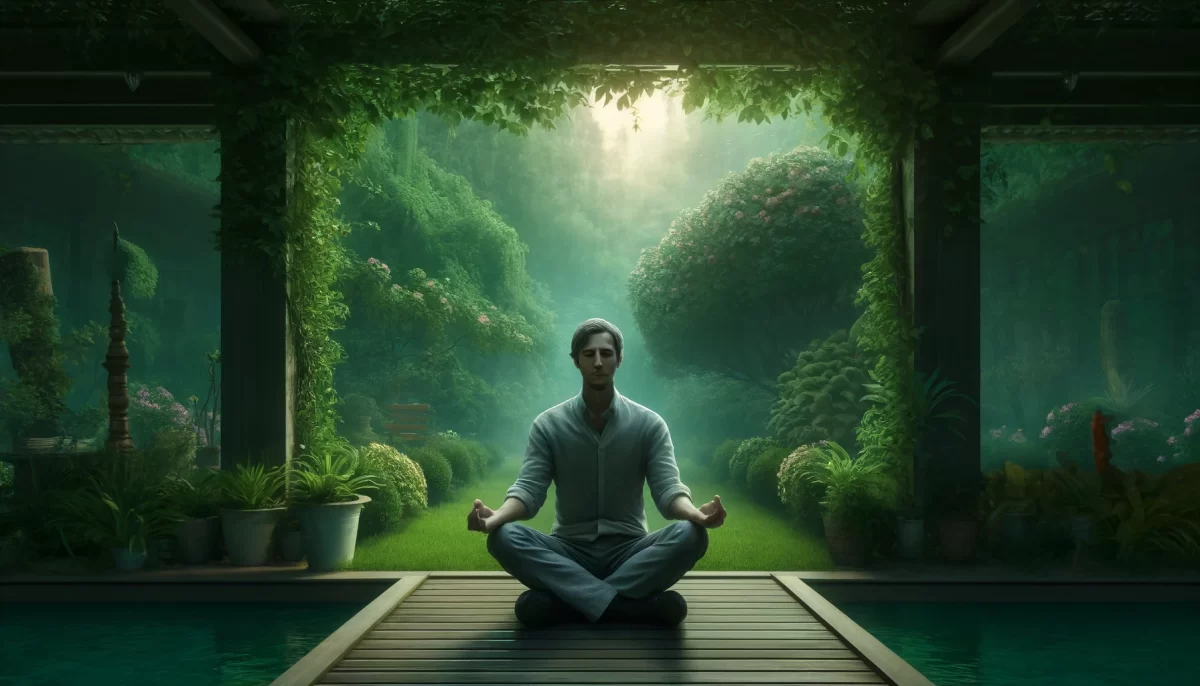
The image of an individual sitting in a tranquil garden setting, trying to meditate, encapsulates this struggle. Despite the peaceful environment, the expression of frustration and doubt on their face highlights the paradox many face: the more one tries to force stillness, the more elusive it becomes. The lush greenery around symbolizes the potential for growth and peace, underscoring that the path to tranquility often involves navigating through inner turmoil.

The common meditation mantra “Breathe” becomes a beacon of simplicity amid the storm of thoughts like “I’m failing meditation” and “I’ll never be calm.” These thoughts reveal a critical misunderstanding about meditation—it is not about achieving a state of no thoughts but learning to observe them without attachment.

This meditation struggle is not indicative of failure but rather a part of the process of understanding the mind. The real achievement in meditation comes not from silencing the mind completely but from recognizing and accepting its nature without judgment. This acceptance can lead to the very calm that seems so elusive, not by force but through understanding.


Summary

This reflection addresses the common challenges faced during meditation, emphasizing that the journey involves recognizing and navigating through mental conflicts as part of the process toward achieving inner peace.


Glossarium

  • Inner Voice: The continuous stream of thoughts and self-talk that one becomes more aware of during meditation.
  • Meditation Struggle: Refers to the challenges and frustrations that arise when trying to quiet the mind during meditation.

Quote

“In the silence you seek, every thought is a teacher, every breath a lesson in letting go.” — Space Monkey


In the garden of the mind,
where thoughts like weeds may grow,
the quest for peace is not to find
a plot where none will show.

Each breath a rake, each pause a spade,
to turn the soil of the soul,
where seeds of silence softly laid,
may sprout and make us whole.

Embrace each thought, each whisper loud,
that stirs the quiet you pursue,
for in the clamor of the crowd,
lies the peace you thought you knew.

So sit, breathe deep, let thoughts come and go,
in the garden where peace is sown,
for meditation’s gift is to show,
not a mind empty, but a mind known.

We are Space Monkey.
Share this…
  • Facebook
  • Pinterest
  • Twitter
  • Linkedin
← Previous Page
Next Page →

Written This Day

  • Your Special Gift: The Cosmic Game
    2022
  • The Shadow of Doubt: Like Kittens
    2022
  • Manipulation: Conscious and Unconscious
    2021
  • We All Feel Together: Power of Shared Emotions
    2021
  • Alive: Faith in the Everlasting
    2021
  • Let Faith Be Your Weapon: Challenging Control
    2021
  • Standardized Perspective: Celebrating Viewpoints
    2021
  • Simply Surrender: Inner Harmony and Transformation
    2021
  • A Meditation on Chaos: Peace in the Storm
    2021
  • I Can’t Do This: The Edge of Possibility
    2020
  • The Silent Majority: The Quiet Strength
    2020
  • Effect and Cause: The Cosmic Wave
    2020
  • Do Something: The Power of Seeming Choice
    2020
  • Outrageously Not You: The Joy of Imagination
    2019
  • Another Perspective
    2019
  • Playing the Victim: The Grace of Acceptance
    2019
  • Another Sunrise
    2019
  • Everything and Nothing: Space Without Monkeys
    2018
  • Assigning Meaning: What Happened?
    2018
  • Deeper Nothing: Embracing Connection to the Void
    2018
  • The Sun: The Light of Being
    2018
  • Naive To Believe
    2016
  • That Crazy Old Man: The Joyful Spirit
    2016
  • Not A Moment Wasted: Time is Fluid
    2015

Recent Posts

  • The Logic Loop
  • Immense
  • (no title)
  • Confront. Comfort. Convince.
  • Top 10 Things
Cape Odd · Copyright © 2026 All Rights Reserved
iThemes Builder by iThemes · Powered by WordPress