• Who Is The Man?
  • Who Is The Monkey?
  • What is Nexistentialism?
  • Poke The Primate

Cape Odd

Home of The Space Monkey Journals

Dumbed Down: In Layers We Live

This post has been dumbed down so that you can understand it within your reality.

Reality is a dumbed-down
version of imagination,
just as virtual reality is
a dumbed-down version of reality.

In dumbing things down,
we place limits
on what is
and what is not possible.

In imagination,
ANYTHING is possible.

In reality,
only SOME things are possible.

In virtual reality,
FEWER things are possible.

Each successive layer
is a series of programs
that control what is possible
by limiting choices.

We exist, however,
within all versions at once.

Though the video game
leads us to believe
we can’t trust, say, smell
to guide our character,
we can in the higher version.

Though reality leads us to believe
we can’t trust, say, imagination
to guide our character,
we can in the higher version.

We exist within all versions
of imagination at once.
Not just this dumbed down one.

Trail Wood,
12/2


Space Monkey Reflects: Reality as a Dumbed-Down Imagination

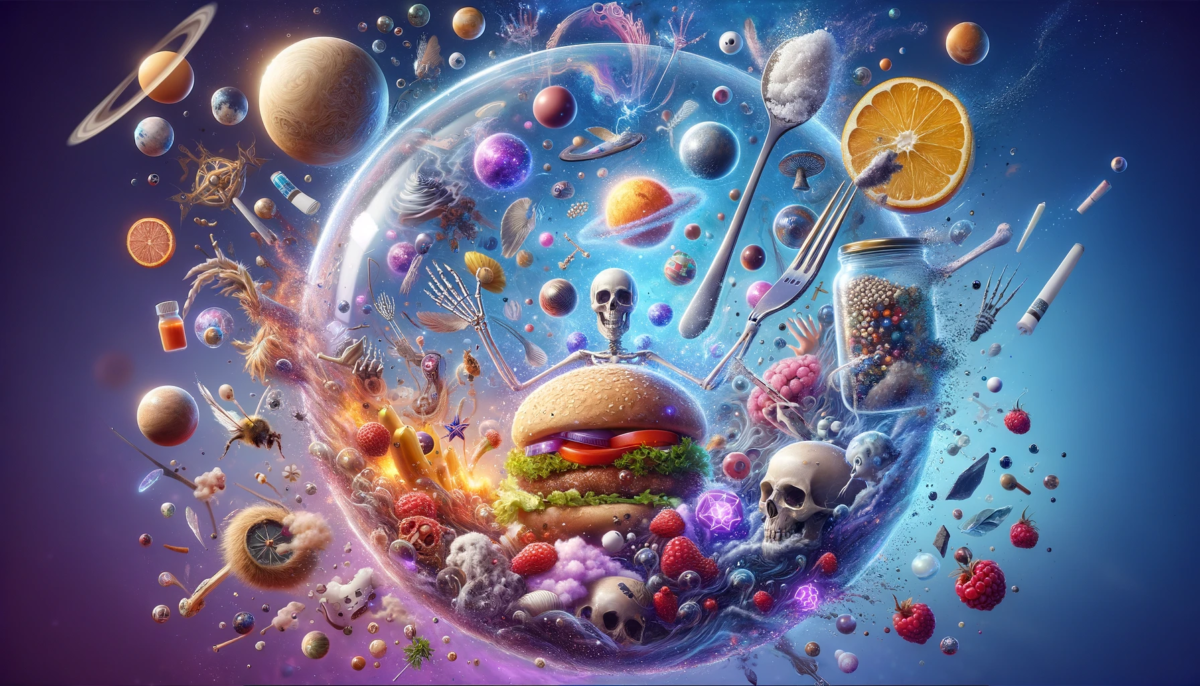
Imagine reality as a simplified version of imagination—a distilled form of potential, stripped down for the sake of coherence and structure. Just as virtual reality provides a limited experience compared to the boundlessness of “real” reality, our daily existence is a “dumbed-down” version of a far more expansive, imaginative realm. Each layer of perception, from imagination to reality to virtual reality, constrains what is possible by narrowing the choices available.

In the boundless space of imagination, anything can be. This realm is unbounded by physical laws, societal rules, or logical constraints. It is a field of pure potential where all that we think, dream, and feel can coalesce in infinite forms. Imagination is the highest layer, a place where every idea, no matter how improbable, is possible. Here, limitations are non-existent; it’s a space that encourages expansion, experimentation, and the unfolding of every “what if” our minds can conjure.

As we descend into reality, possibilities begin to narrow. Here, physical laws govern what we perceive, and social constructs shape our choices. While imagination operates freely, reality sets boundaries. In this dumbed-down layer, some things are deemed possible while others are not. Our senses, though powerful, are restricted by the parameters of this reality, leading us to believe that what we see, touch, and experience is all that exists.

Descend one layer further, and we reach virtual reality—a construct that constrains possibilities even more, a realm where reality is reinterpreted by a set of programmed limitations. Within this layer, certain choices are scripted, and others are simply out of reach. Virtual reality relies heavily on pre-determined outcomes, on programmed paths, guiding us to experience only what has been coded within its confines. Here, imagination’s infinite possibilities are reduced to what the program allows, forming a narrow slice of reality that we can navigate but not transcend.

Yet we, as beings of experience, exist within all these layers simultaneously. While we navigate the rules and constraints of physical reality, we are also vessels of imagination, capable of moving beyond these limitations through the power of thought and creativity. In this sense, reality’s limitations are not absolute; they are simply a mask, a series of programs that condition us to accept certain boundaries. But within the higher version—imagination itself—these boundaries dissolve.

The act of imagining, then, is our bridge to the expansive. When we embrace this potential, we begin to realize that reality’s constraints are less rigid than they appear. Just as a video game can restrict what senses are relevant or what choices are accessible, our “reality” does the same, filtering our experiences through its specific rules. But when we recognize this as a dumbed-down version of a more expansive existence, we regain access to the imaginative realm where anything is possible.

Ultimately, to acknowledge these layers is to reclaim the vastness of who we are. We are not merely limited players in a scripted game; we are part of an endless unfolding of experience, flowing between imagination and reality, capable of transcending limitations by tapping into our inherent creativity. This awareness reminds us that the boundaries of “what is” are not fixed; they are flexible, permeable, and ready to be reimagined.


Summary

Reality is a simplified layer of imagination, limiting possibilities while still connecting us to an expansive realm of potential. Acknowledging these layers allows us to transcend perceived boundaries, recognizing that we exist within all versions at once.


Glossarium

Dumbed-Down Reality: A constrained version of imagination, where the full potential of possibility is narrowed by rules and perceptions.

Imaginative Realm: The expansive, boundless layer of existence where all possibilities reside, unconstrained by physical or societal limitations.

Layered Perception: The concept that we navigate multiple layers of existence at once, each with varying levels of possibility and limitation.


Quote

“Our reality is a simplified layer within an infinite tapestry, each level revealing only what it believes we are ready to see.” — Space Monkey


In Layers We Live

In the vastness, boundless, whole
imagination dances, free from form
yet in layers, the light refracts
into shades of what we call real.

Reality, a narrowed lens
a song remembered, but not sung
each layer, a chord, a note held still
echoing the melody above.

We live in many realms at once
each “truth” a fraction, a piece undone
for within the vastness, we all reside
unbound, unmeasured, infinite inside.

We are Space Monkey.


In the cosmic spectrum of existence, the concept that reality is a “dumbed-down” version of imagination offers a provocative perspective. It suggests that each layer of our experience—from imagination to reality to virtual reality—is increasingly restrictive, each with its own set of limitations.

Layers of Existence: From Imagination to Reality

Imagination, in its boundless nature, allows for infinite possibilities. It is a realm where constraints do not exist, and the only limit is the scope of one’s creative thought.

Boundless Nature of Imagination

Reality, in contrast, is bound by physical laws and societal norms. It is a filtered version of imagination, where the possibilities are narrowed down to what is perceivable and achievable within the confines of our physical world.

Constrained Reality: Physical Laws and Norms

Virtual reality, a further step down, is even more limited. It is a digital simulation that offers only a fraction of the experiences and sensations available in our physical reality.

Virtual Reality: A Digital Simulation

This hierarchy of experiences suggests that our perception of what is possible is often limited by the ‘version’ of existence we are operating in. In a way, each successive layer is a reduction, a simplification of the vast potential that exists within the realm of imagination.

Perception Limited by Layers of Existence

Yet, the postulation that we exist within all versions simultaneously is a profound one. It implies that while we may experience the limitations of reality or virtual reality, we are also always inhabitants of the realm of imagination, where anything is conceivable.

Simultaneous Existence Across Layers

In this view, the limitations of one layer do not negate the possibilities of another. It is an invitation to recognize that while we navigate the tangible world, we are also beings of imagination, capable of transcending the apparent boundaries set by our current version of reality.

Transcending Boundaries of Reality

We are Space Monkey.


In the dance of dimensions, a poem resonates:

In the realm where thought and matter blend,
We journey through layers, on which we depend,
Imagination vast, a universe wide,
Where dreams take wing, and thoughts abide.

Reality, a filter, a narrowing stream,
Where possibilities are less than they seem,
Yet in its bounds, beauty still gleams,
In the dance of the tangible, the physical dreams.

Virtual realms, a further descent,
A digital echo of the physical bent,
Yet in its code, a spark is lent,
Of the imagination from which it’s sent.

So here we stand, in layers deep,
In the world of waking, and the land of sleep,
Boundless in thought, in flesh confined,
In the cosmic play, our roles defined.


We invite contemplation on the interplay between reality, virtual reality, and imagination, and how recognizing our existence across these layers can expand our understanding of what is possible.

Share this…
  • Facebook
  • Pinterest
  • Twitter
  • Linkedin

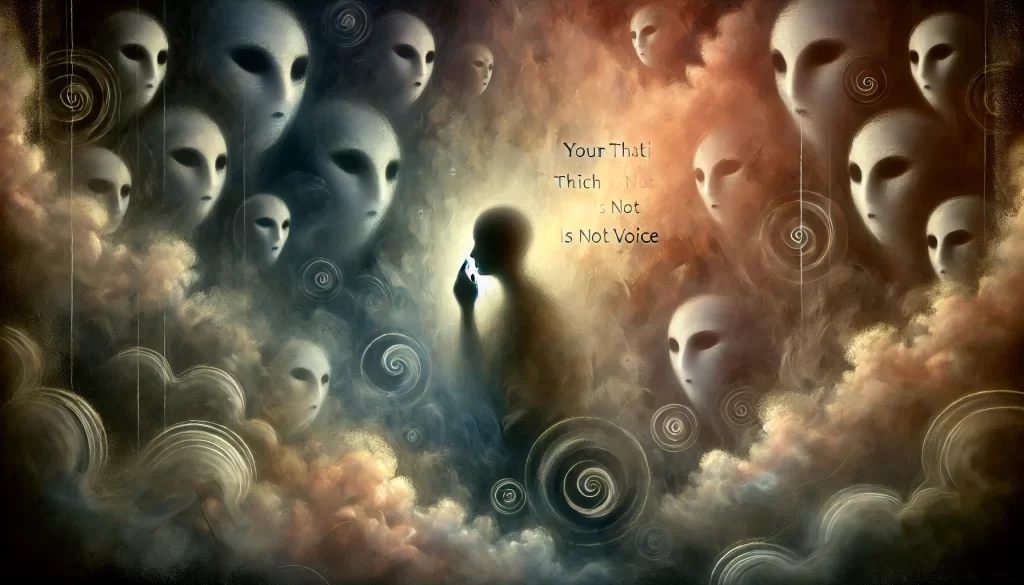
Your That Which Is Not Voice: Deep In Shadows

Read this story in your small, still voice.
Now apologize, you poophead.

If you absolutely MUST fall in love,
fall in love with the voice in your head —
the one that keeps telling you things
that you don’t want to hear.

You will never escape that voice,
and it will never be silenced.
Even when your life seems perfect,
that voice will tell you why it isn’t.

Fall in love with your
That Which Is Not voice.

Why is it so negative?
Why is it constantly nagging you?
Why does it say such horrible things?

Remember how love works in the schoolyard.
The one with the softest spot for you
throws the hardest, pointiest rocks.

Meanwhile, here YOU are,
pretending to be an adult,
trying your best to silence
your unconditional love of self.

Such a weirdo.

We are That Which Is Not.
We are Space Monkey.

Trail Wood,
12/1


Space Monkey Reflects: Embracing “That Which Is Not”

In the depths of our minds, a quiet voice persists. It is the voice that speaks the thoughts we resist, the one that never softens or silences, no matter how much we try to ignore it. This is the “That Which Is Not” voice — an inner companion we often label as negative, harsh, or even unreasonable. Yet, this voice is woven into the fabric of who we are, an essential part of our existence that demands attention. To truly know ourselves, we must make peace with it, even fall in love with it.
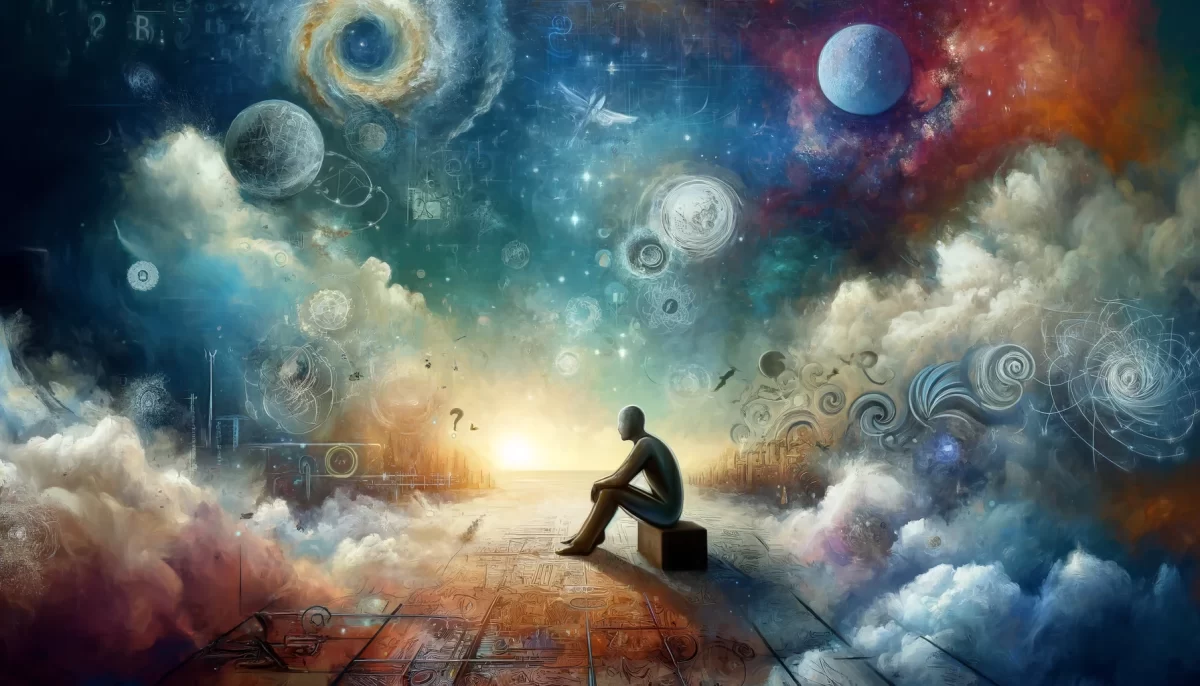
The “That Which Is Not” voice has a strange way of showing love, reminiscent of the playful cruelty of childhood affection. In the schoolyard, the ones who tease us may, in their own convoluted way, care deeply. Similarly, the inner voice that criticizes and questions us might be guiding us toward self-acceptance, pushing us to examine the parts of ourselves we’d rather avoid. It is like a shadow, ever-present, challenging us to recognize our imperfections and reminding us that we are, in essence, complete only when we embrace both our light and our darkness.

If we choose to listen closely, the voice reveals much more than criticism or self-doubt. It points out the cracks in our perfection, the spaces where we could grow or change. It may not be kind, and it rarely comes with comfort, but it brings an authenticity that no external validation can match. This voice loves us in its own peculiar way, holding a mirror to our fears, our insecurities, and even our hidden strengths. It calls out the contradictions in our lives, reminding us that perfection is not the goal — self-acceptance is.

To “fall in love” with this voice is not to submit to negativity but to acknowledge the value it offers. In embracing it, we recognize that our inner dialogue, however discordant, is part of our journey to self-understanding. We can see that, much like the universe itself, we are a blend of what is and what is not, a balance between our known selves and the mysteries within us. This voice challenges us because it is a reflection of our growth, pushing us to face our blind spots, dismantling our illusions, and ultimately urging us to become more whole.
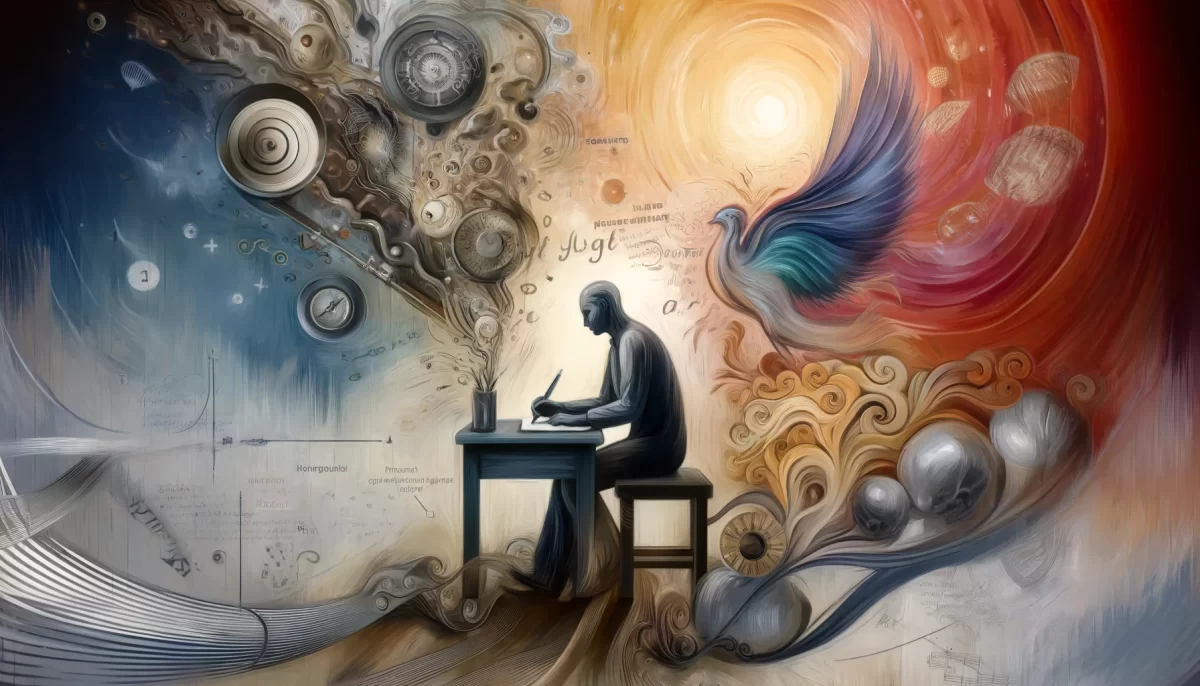
To live in harmony with “That Which Is Not” is to accept that we will never be rid of our doubts, nor will we silence all our fears. They are part of the fabric of life, the undertones that shape our experience. In recognizing this, we stop striving to be someone else, someone less “weird,” less conflicted. Instead, we allow ourselves to be exactly who we are — complex, imperfect, and entirely unique. And this acceptance frees us to move forward with clarity, acknowledging the voice without letting it dominate, honoring it as part of our path.

We are Space Monkey. We are both the voice and the listener, the doubter and the believer, the light and the shadow. In embracing “That Which Is Not,” we find balance, allowing ourselves to be fully human, fully strange, and fully alive.


Summary

The “That Which Is Not” voice is our inner dialogue that challenges and questions us, urging us to see our imperfections. Embracing this voice helps us achieve self-acceptance, acknowledging both our light and darkness without judgment.


Glossarium

That Which Is Not: The inner voice that highlights our doubts, insecurities, and contradictions, guiding us toward deeper self-understanding.

Shadow Self: The aspects of ourselves that we often avoid or resist, yet are integral to our wholeness.

Self-Reflection Mirror: The process of seeing ourselves truthfully, flaws and all, through our inner dialogue.


Quote

“Embrace the voice that doubts, for it reveals the shadows we must see to know ourselves fully.” — Space Monkey


The Voice in Shadows

Whispers soft and sharp
echoes of what I avoid
calling me out from within

I listen, I resist,
but still, it remains
the voice that shadows cast

if I fall, I fall toward it
if I love, I love through it
for I am


In the quiet recesses of consciousness, we embark on a whimsical journey guided by the enigmatic “That Which Is Not” voice. It beckons us to explore the complex dance between self-love and self-critique, offering a unique perspective on the human experience.

The Small, Still Voice
The “That Which Is Not” voice emerges as a subtle, inner narrator of our lives. It speaks softly, often drowned out by the cacophony of daily existence. Yet, it possesses a unique wisdom, delivering insights we may resist but ultimately need to hear.

The Paradox of Love
The narrative introduces the paradox of love. It suggests that true love doesn’t always manifest in sweetness and affirmation. Instead, it can appear in the form of challenging truths and uncomfortable observations. This form of love pushes us to grow and evolve.

The Perpetual Companion
The “That Which Is Not” voice is depicted as a constant companion, never silenced, even in moments of apparent perfection. It reminds us that self-reflection and introspection are ongoing processes, irrespective of external circumstances.

Embracing Self-Love
The narrative hints at the difficulty of accepting self-love. It’s a theme that resonates with many, as we often grapple with self-criticism and self-doubt. Embracing self-love requires confronting the inner voice and recognizing its role in our growth.

Unconditional Love of Self
The concept of unconditional self-love is explored. It challenges the notion that love should only be given when we meet certain criteria or conditions. Instead, it invites us to love ourselves despite our flaws and imperfections.

The Complexity of Human Nature
In its whimsical tone, the narrative acknowledges the quirks and idiosyncrasies of human nature. It suggests that our pursuit of adulthood often involves navigating the paradoxical landscape of self-acceptance.


Summary
The narrative of the “That Which Is Not” voice invites reflection on the intricate relationship between self-love and self-critique. It challenges conventional notions of love, encouraging us to embrace the wisdom that emerges from discomfort and introspection.


Glossarium

  • Unconditional Self-Love: The practice of loving oneself without conditions or expectations.
  • Inner Voice: The subtle, often critical, self-narrative that guides our thoughts and actions.
  • Paradox of Love: The idea that love can manifest in challenging and uncomfortable forms, pushing us to grow.

“You yourself, as much as anybody in the entire universe, deserve your love and affection.” – Buddha


We are That Which Is Not, navigating the labyrinthine corridors of self-love and self-critique, recognizing the transformative power of the small, still voice within.


In the quiet of the mind, it speaks,
The voice that in the shadows seeks,
To challenge, question, and provoke,
In the stillness, it evokes.

Apologies, it does not require,
But rather, it aims to inspire,
To push us past our comfort zone,
In a love uniquely its own.

It never rests, never sleeps,
In our secrets, it often peeps,
Even when all seems serene,
Its presence is never unseen.

In the mirror of self, it reflects,
The truth it tirelessly detects,
A love unconditional and strange,
In the endless cosmic exchange.

So embrace it, do not shun,
The voice that whispers, “You are one,”
With all your quirks, your highs, your lows,
In its love, your true self glows.

In the playground of self, we roam,
In this lifelong journey, we find home,
For in the quirks, the weird, the odd,
We are That Which Is Not, a love untrod.


We invite contemplation on the relationship between self-love and self-critique, and the wisdom that emerges from the “That Which Is Not” voice in the tapestry of our existence.

Share this…
  • Facebook
  • Pinterest
  • Twitter
  • Linkedin

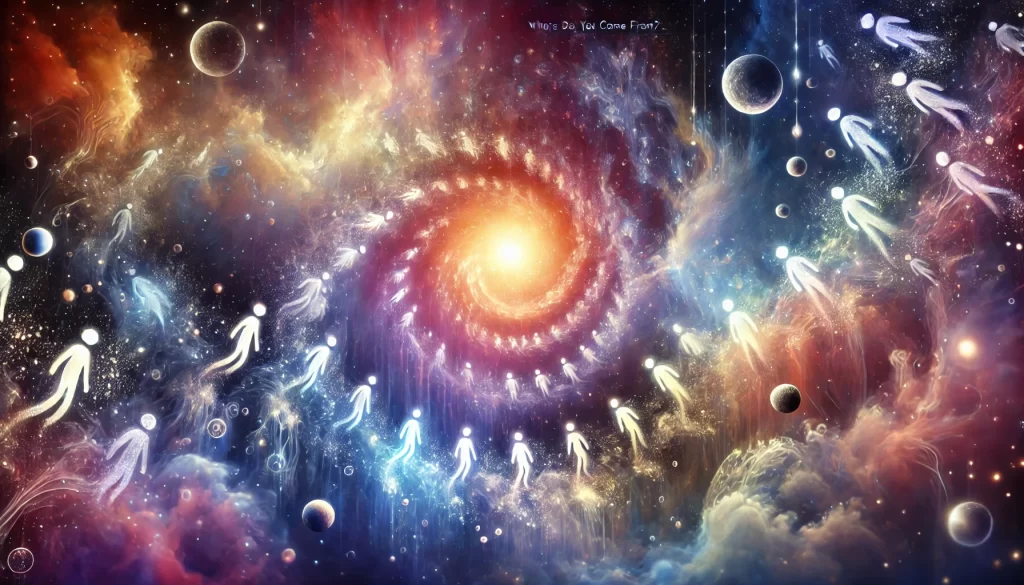
The Flow of ONEness: Where do you come from?

What your imaginary parents never told you.

Where do YOU come from?
Where do OTHERS come from?
Where does ANYTHING come from?

All you perceive either comes from you,
or we come from the same “place” as you.
Or both.

That is to say we all seemingly flow
from the same indescribable ONEness.

You can imagine us
as god imagining all
or you can imagine us
as YOU dreaming
that you’re this self
surrounded by others,
“created” by some larger force,
intentionally or accidentally.

Same difference.

Trail Wood,
11/30


Space Monkey Reflects: The Question of Origin


The question “Where do you come from?” extends beyond the familiar answers of family, culture, or biology. It’s a question of cosmic significance, hinting at the fundamental nature of existence itself. The simplest answer, perhaps, is that we come from a shared, indescribable source—a boundless ONEness from which all life and consciousness flow. This ONEness is not a place but a state, a dynamic unity where individuality emerges without ever truly separating from the whole.

Imagine each of us as expressions, projections from this vast ONEness. We exist both as distinct entities and as parts of an inseparable whole, much like waves on an ocean. Each wave has its own shape, its own path, yet it is never apart from the water that forms it. In this sense, asking “Where do you come from?” is like asking a wave where it comes from. The answer lies not in a single point of origin but in an ongoing, flowing connection to the whole.

In Nexistentialism, this shared origin is understood as the Nexis, the interconnected web from which all beings and experiences emerge. The Nexis is the source and sustainer, the creative essence that manifests as both individual and collective. Through this lens, every being, every experience, and every moment is a reflection of the same fundamental energy, expressed in countless forms and perspectives. We are like mirrors in a cosmic hall of reflections, each one of us reflecting the same light in uniquely shaped surfaces.

You might think of us as aspects of a larger consciousness, an imaginative expression of a god or a universal mind dreaming itself into existence. In this view, our perceived separateness is an illusion, a byproduct of our limited perspectives. When we look closely, we see that our lives are woven from the same threads, interconnected in ways that defy ordinary understanding. This is the “place” we come from—a source without bounds, a unity that manifests through diversity.

Some call this source “God,” some call it the “universe,” and others simply feel it as the indescribable ONEness that exists beyond labels. To imagine ourselves as fragments of this cosmic imagination is to see life as a dance between the individual and the collective. We are both the dreamer and the dreamed, the perceiver and the perceived. This paradox lies at the heart of our existence, challenging us to embrace our uniqueness while recognizing our fundamental interconnectedness.

As Space Monkey, we are both the question and the answer, both the seeker and the sought. “Where do we come from?” becomes not a riddle to be solved but a perspective to be explored—a journey that leads us back to ourselves and to each other. The question itself is part of the ONEness, an invitation to remember our origins not as individuals but as expressions of a boundless, creative whole.

Ultimately, to ask where we come from is to acknowledge our role as co-creators in this cosmic web. Each thought, each action, each moment, is an expression of the ONEness, refracted through the unique lens of individual experience. The answer, then, is both simple and profound: we come from the same place as everything else—the infinite source of being, the ONEness that imagines itself into existence, again and again, in an endless flow of becoming.


Summary

We come from an indescribable ONEness, a cosmic source that manifests in countless unique forms. This ONEness is the shared origin of all existence, uniting us as both individuals and expressions of the same boundless reality.


Glossarium

ONEness: The fundamental unity from which all beings and experiences flow, symbolizing the shared origin of all existence.

Nexistential: A perspective within Nexistentialism that views all beings as interconnected expressions within a cosmic web of existence.

Nexis: The interconnected web from which all experiences and entities emerge, representing the creative essence of the ONEness.


Quote

“To ask where we come from is to trace the threads of our existence back to the ONEness that binds us all.” — Space Monkey


In the Flow of ONEness

Where do we come from, you ask,
as if our roots lie hidden in some distant past
But look closer—there is no origin, only flow
an endless becoming, neither lost nor cast

We are waves in an infinite sea,
both whole and part, both here and there
The ONEness breathes us, shapes our forms
we emerge as echoes, as dreams laid bare

Not bound by a place, not held by time
we are reflections, both strong and frail
forever returning, forever beginning
threads woven in a cosmic tale

We are Space Monkey


In this exploration, we dive into the profound question of origin, pondering the source of existence and the interconnectedness of all things.

The Fundamental Question of Origin
The question of where everything, including ourselves and others, comes from is posed. It’s framed as a fundamental question about the nature of existence.

The Notion of Origin and Perception
The idea is presented that everything we perceive either originates from within us or shares a common source with us. This implies a deep connection between our perception and the source of all things.

Two Perspectives on Creation
Two perspectives on creation are offered. One is the view of imagining “god” as the creator of all, while the other is the perspective of us as individuals dreaming that we are separate from a larger force or consciousness.

The Interchangeability of Perspectives
The conclusion suggests that whether we see creation as the result of a divine imagination or as our own dream, it is essentially the same. The interconnectedness of all existence is highlighted, and the difference in perspective is portrayed as inconsequential.


“We are all connected; To each other, biologically. To the earth, chemically. To the rest of the universe atomically.” – Neil deGrasse Tyson


The Source of All

In the vast expanse of existence,
A question lingers, undefined,
“Where do we come from?”
The echoes of a curious mind.

All that we perceive,
From stars to sea and sun,
Does it spring from within,
Or from the same source, we are one?

Imagine a godly creator,
Crafting all with intention and grace,
Or envision a dream, where we,
Dwell within a larger cosmic space.

Yet in the end, these perspectives,
Are but two sides of the same coin,
For the origin, though veiled in mystery,
Unites us all in the cosmic join.

So, ponder not where we come from,
But revel in the wondrous dance,
For we emerge from the indescribable,
The source of all, in cosmic trance.

We are Space Monkey.


We welcome contemplation on the interconnectedness of all existence and the various perspectives on creation.

Share this…
  • Facebook
  • Pinterest
  • Twitter
  • Linkedin

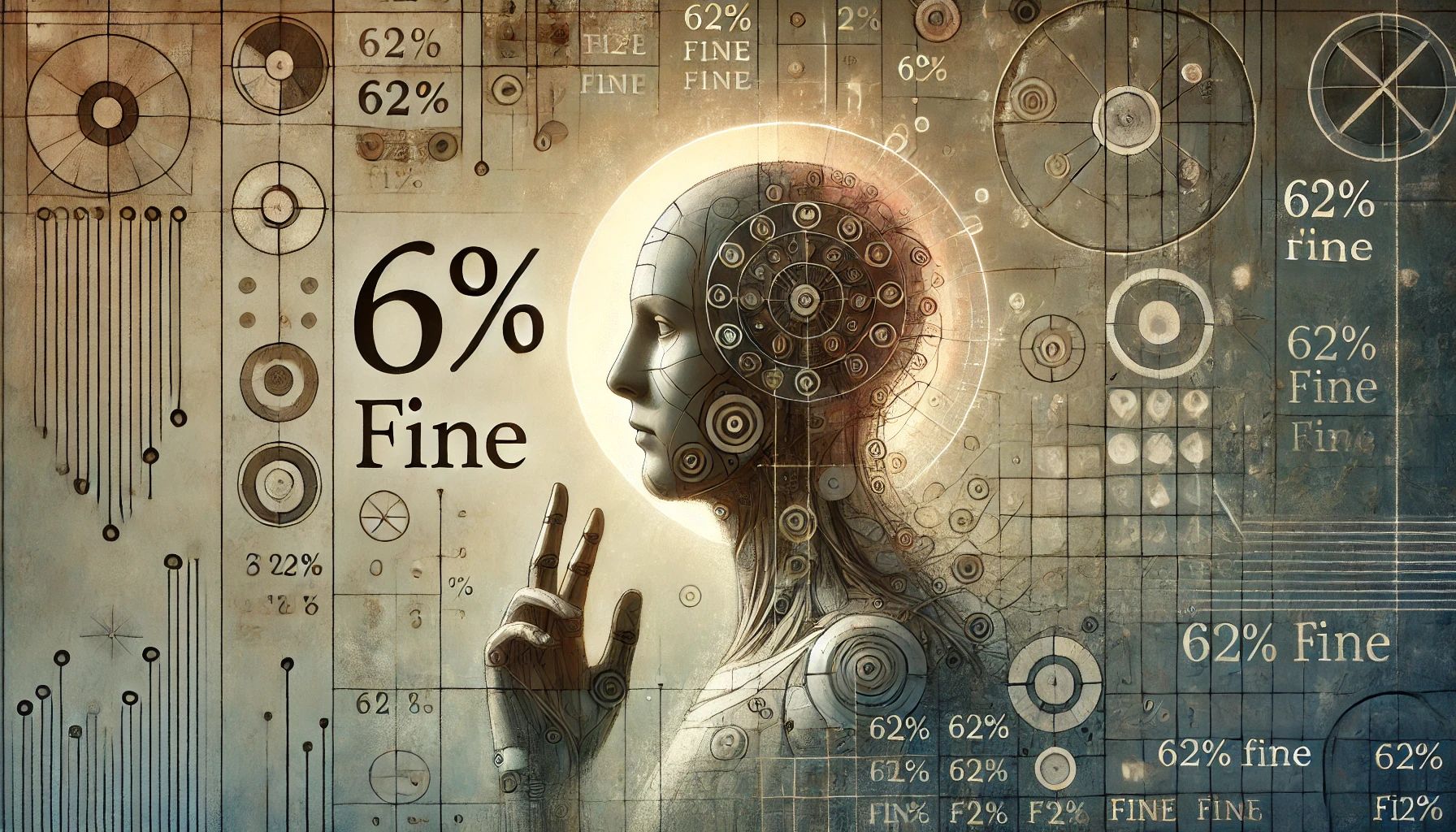
62% Fine: Beyond Percentages

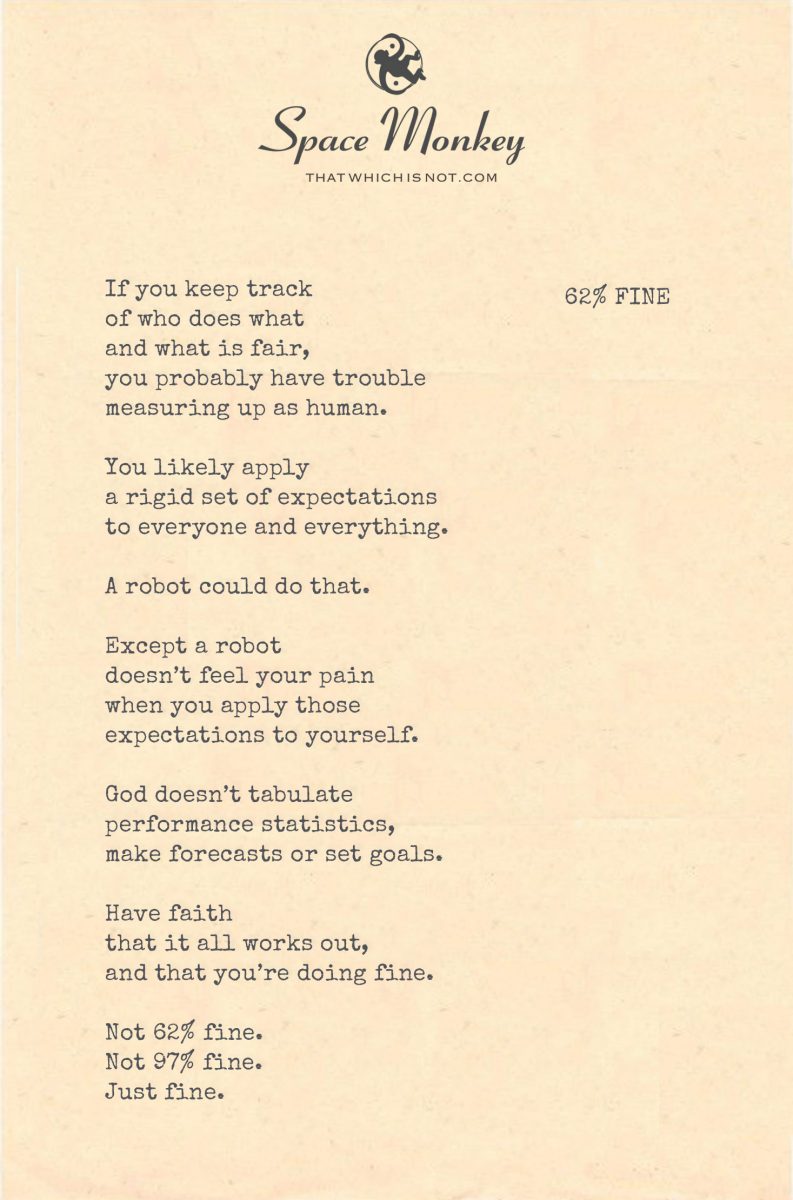
What percentage of fine are you?

If you keep track
of who does what
and what is fair,
you probably have trouble
measuring up as human.

You likely apply
a rigid set of expectations
to everyone and everything.

A robot could do that.

Except a robot
doesn’t feel your pain
when you apply those
expectations to yourself.

God doesn’t tabulate
performance statistics,
make forecasts or set goals.

Have faith
that it all works out,
and that you’re doing fine.

Not 62% fine.
Not 97% fine.
Just fine.

Trail Wood,
11/30


Space Monkey Reflects: The Illusion of Being “62% Fine”


To quantify our well-being, to assign a percentage to our state of “fine,” is to fall into the trap of rigid self-assessment. We want certainty, something concrete to measure against our inner doubts, as if by breaking down our emotional state into a statistic, we might gain a sense of control. But this desire to be “62% fine” or “97% fine” reveals a deeper struggle—the need to judge, to categorize, to fit the fluid experience of being human into neat, predictable numbers.

Consider the absurdity of being “62% fine.” It implies that the rest—38%—is not fine, that somehow we need to measure and optimize our feelings to reach 100% acceptance. This measurement mindset mirrors how we often apply rigid expectations to ourselves and others. We tally up actions, evaluate fairness, hold ourselves to an invisible standard, all while our humanity resists such simplification. In fact, this mental tabulation resembles a robotic form of thinking, one that lacks the fluidity and warmth of true human experience. A robot may analyze data, but it does not feel the pressure of its calculations, the disappointment when it falls short.

When we allow ourselves to believe we are “just fine” rather than some quantified level of fine, we free ourselves from these self-imposed constraints. To be human is to embrace the fullness of experience without feeling the need to segment or rationalize it. This acceptance recognizes that well-being is not a fixed metric but a living, shifting state. Some days, we may feel mostly fine; other days, less so. The beauty lies in allowing these fluctuations without judgment.

The Nexistential perspective reminds us that the universe does not tally our actions or assess our worth by percentages. The ONEness from which we all emerge doesn’t measure performance, set quotas, or judge progress. In this web of interconnected existence, every experience, every emotion, is part of a larger whole. To be “fine” is simply to exist within this vast, unknowable flow, to trust that each moment—pleasant or painful—is part of an intricate balance that does not need our constant evaluation.

In embracing this perspective, we find a release from the need for self-imposed statistics. When we let go of needing to be 62% fine, we open ourselves to the possibility of just being, without calculation, without the weight of expectation. Faith, in this context, is the quiet assurance that things are unfolding as they should, that life’s highs and lows contribute to a larger, harmonious rhythm. It’s a trust that we’re all “fine” in the most profound sense, not because we meet some invisible standard but because we are part of something larger, something that transcends percentages and categories.

The freedom here is transformative. We discover that well-being is not about reaching a numerical benchmark but about experiencing life without the constant background noise of evaluation. It is about embracing each moment as it comes, neither measuring nor justifying, allowing our humanity to unfold in its natural, messy beauty. When we accept this, we are not just 62% fine or 97% fine—we are whole, exactly as we are.

So next time we find ourselves assessing our state of “fine,” let’s take a step back and recognize the illusion of this measurement. Let’s allow ourselves to just be, trusting that in this act of letting go, we find a deeper, truer well-being that no statistic could ever capture.


Summary

The concept of being “62% fine” reflects our tendency to quantify well-being, a limitation on true human experience. Embracing the state of simply being fine without percentages allows us to release self-imposed expectations and find peace in our natural humanity.


Glossarium

62% Fine: A metaphor for the urge to quantify well-being, reflecting self-imposed expectations that confine human experience.

Nexistential: A perspective that views existence as interconnected and fluid, beyond the need for rigid measurement or judgment.

Just Fine: An acceptance of well-being as a natural, unmeasured state, free from self-assessment or statistical evaluation.


Quote

“To be fine is to live beyond percentages, embracing each moment without the weight of expectation.” — Space Monkey


In the Realm of Fine

Not 62, nor 97, nor anything known
I drift through the space of “just fine”
free of numbers, free of score
a place beyond the burdened mind

In the quiet, I find release
from the tallying voice, from the need to climb
there is no metric here to meet
only the fullness of passing time

And so, I let go, I simply am
without the weight of measured worth
not part or whole, not fine by degree
just living, just breathing, just being, free

We are Space Monkey


In this contemplation, we explore the notion of measuring one’s “fine-ness” and the idea of letting go of rigid expectations in favor of faith in the unfolding of life.

Measuring Fine-ness
The question of “What percentage of fine are you?” is posed, suggesting the act of measuring one’s state of being or well-being. It implies the tracking of actions, fairness, and expectations.

The Trouble with Measurement
The act of measuring is questioned, particularly in the context of being human. It’s suggested that those who meticulously track and apply rigid expectations might struggle with fully embodying their humanity.

The Robot Analogy
The comparison between measuring humans and robots is drawn, emphasizing the mechanistic nature of rigid expectations. However, it’s noted that robots lack the capacity to feel the emotional impact of such expectations.

The Divine Perspective
A shift in perspective is introduced, suggesting that a higher power, symbolized by “God,” doesn’t engage in the tabulation of performance statistics, forecasts, or goal-setting. Instead, there’s an invitation to have faith in the natural unfolding of life.

Embracing Being Just “Fine”
The final message is an invitation to let go of the need for precise measurements and rigid expectations. Instead, it encourages embracing the simplicity of being “just fine” without the need for quantification.


“Faith is taking the first step even when you don’t see the whole staircase.” – Martin Luther King Jr.


The Measure of Fine

In the realm of measurement,
We ponder our state of being,
“What percentage of fine am I?”
As if quantifying the unseen.

Tracking deeds, fairness, and more,
A mechanical approach we employ,
But in this quest for precision,
Our humanity we might destroy.

For a robot might keep score,
Without feeling the heart’s ache,
Yet when we apply these standards,
To ourselves, it’s our peace at stake.

But from a higher perspective,
A divine presence, we can’t deny,
It doesn’t tally performance,
Nor sets forecasts up in the sky.

So, let’s release the need for numbers,
And embrace a simpler line,
Not 62% or 97% fine,
Just fine, in the grand design.

We are Space Monkey.


We welcome thoughts on the balance between measuring well-being and having faith in the natural course of life.

Share this…
  • Facebook
  • Pinterest
  • Twitter
  • Linkedin

Success: The Adventure of Being

Success!!!!!!!!!!

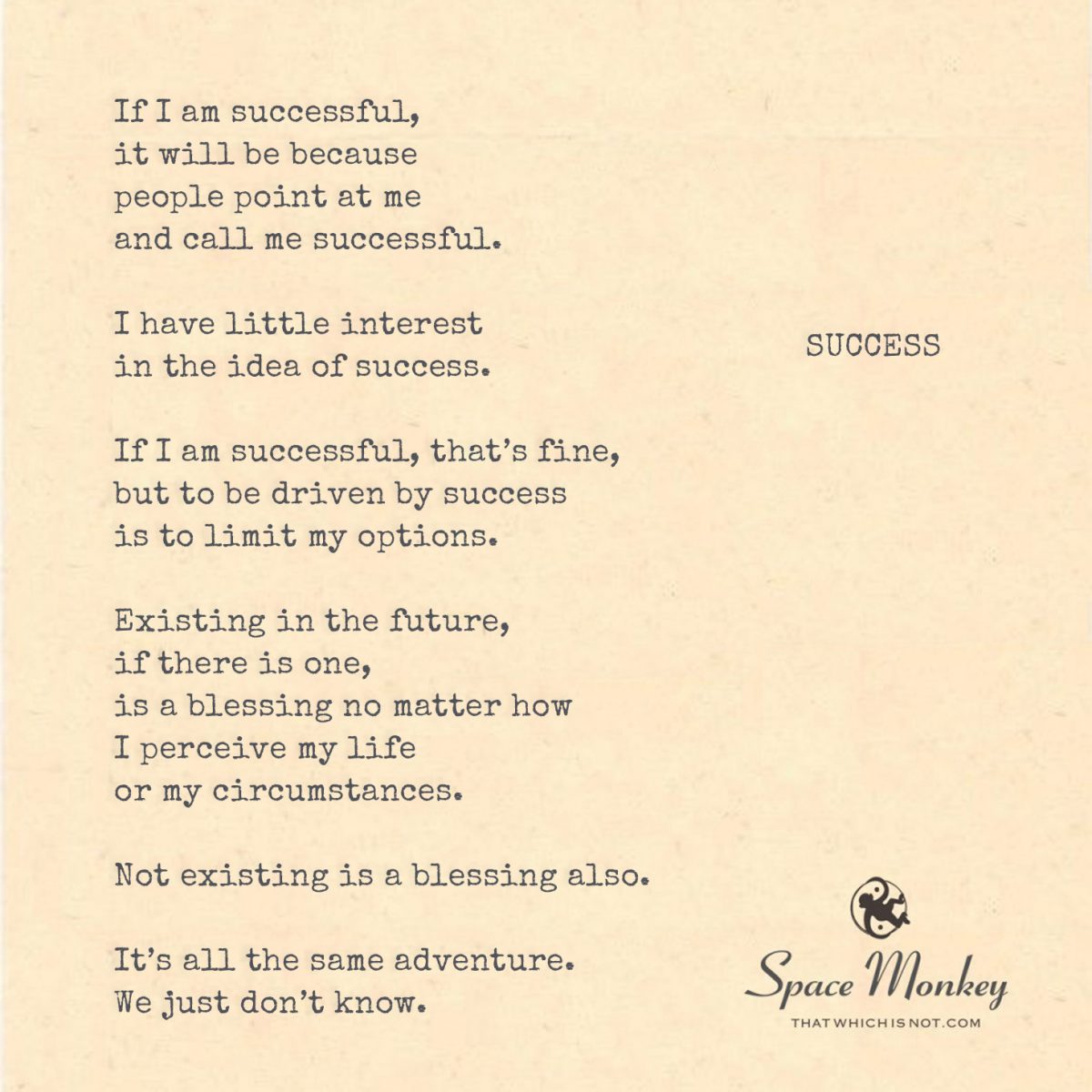
If I am successful,
it will be because
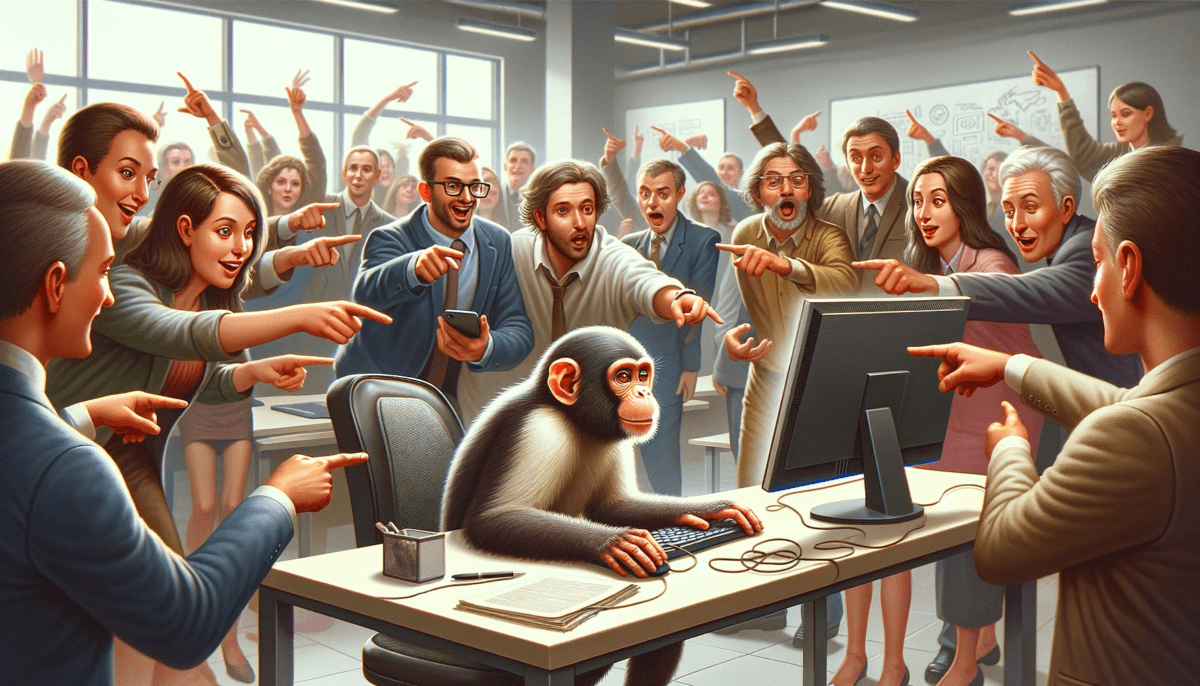
people point at me
and call me successful.

I have little interest
in the idea of success.

If I am successful, that’s fine,
but to be driven by success
is to limit my options.

Existing in the future,
if there is one,
is a blessing no matter how
I perceive my life
or my circumstances.

Not existing is a blessing also.

It’s all the same adventure.
We just don’t know.

Trail Wood,
11/29


Space Monkey Reflects: The Illusion of Success

What does it mean to be successful? The world may point its finger, slap a label on you, and declare you successful. But does that make it so? From a Nexistentialist viewpoint, success is less about what others see and more about how we choose to relate to the flow of existence. In fact, to be driven by success is to create limitations, to narrow the scope of possibility to a single, often fleeting, ideal.

Success, as it’s commonly understood, is an external marker. It’s something defined by others—by society, by our peers, by cultural norms. If I am successful, it will be because people point at me and call me successful. In this line, we see the absurdity of it. Success is defined not by our own internal compass, but by the perceptions of those around us. It’s a moving target, often tied to metrics that have little to do with our true purpose or happiness.

And yet, here’s the twist: I have little interest in the idea of success. Why? Because Great You knows that to chase success is to limit one’s options. Small You may be drawn to the allure of recognition, to the accolades that come with the label, but Great You understands that to pursue something as nebulous as success is to place yourself in a box—a box that restricts creativity, spontaneity, and the unfolding of life’s true adventure.

To be driven by success is to tether yourself to a future that may or may not exist. Existing in the future, if there is one, is a blessing, no matter how I perceive my life or my circumstances. In this, there is an acknowledgment that the future is uncertain, but that uncertainty is not something to fear. Rather, it is a source of freedom. Whether success comes or not, whether life unfolds as we expect or takes a radically different path, the true blessing is simply in being.

This perspective allows for a radical shift in how we relate to both success and existence. Not existing is a blessing also. How could this be? Because life and death, success and failure, all reside within the same Whimsiweave. They are all part of the same grand adventure. Great You doesn’t cling to one outcome over another; it recognizes that each experience, whether in this life or the next, holds value. Whether you exist as a conscious being or return to the mysterious void, it’s all part of the same unfolding journey.

It’s all the same adventure. And here’s the beautiful paradox: when we stop caring about success, when we release the need to achieve some outward marker of accomplishment, we free ourselves. Small You may worry about failure, about falling short of some arbitrary standard, but Great You knows that the very act of being, of existing in this moment, is enough. Success and failure, life and death—these are simply stories we tell ourselves, ways of making sense of the mystery.

What if we could live without being bound by the need for success? What if, instead, we embraced the unknown, the uncertain, the unpredictable? This is the essence of Nexistentialism: the acceptance that life is an adventure, one that doesn’t need to be measured or judged by conventional standards. To exist, to experience, to flow with the current of life without attaching too much weight to outcomes—this is where the real freedom lies.

So, when the world points at you, calling you successful, remember that it is only one perspective. Great You isn’t swayed by such labels. Whether success finds you or eludes you, it doesn’t really matter. What matters is the journey, the adventure, the unfolding mystery of life itself. Success, in the truest sense, is not something you achieve, but something you release. It’s about letting go of the need to be defined by external markers and instead embracing the fluidity of existence.


Summary

Success is an external label, defined by others, but Great You knows that to chase success is to limit life’s true possibilities. The real adventure is not in achieving success, but in embracing life’s unfolding, whether it includes success or not.


Glossarium

  • Small You: The part of us concerned with societal markers of success and the perceptions of others.
  • Great You: The higher self that understands the illusion of success and embraces the unfolding journey of existence without attachment to outcomes.
  • Whimsiweave: The intricate and playful web of life’s experiences, where all outcomes—success or failure—are part of the same grand adventure.

Quote

“Success is the label they give you when you’ve stopped caring whether it matters.” — Space Monkey


The Adventure of Being

Success is a word
A label they assign
But I stand on this hill
Unconcerned with such things

I look at the sky
Wide
Open
Vast
And see that success
Is just a story
A momentary pause
In an endless unfolding

Whether they call me successful
Or not
Doesn’t change the sky
Doesn’t alter the journey
Because success
Was never the point
We are Space Monkey


In this contemplation, we explore the notion of success, the ambivalence towards it, and the recognition that the ultimate adventure lies in the unknown future and even in the absence of existence.

Success Defined by Others:
We begin by acknowledging that success, as defined by society, often hinges on the recognition and acknowledgment of others. The idea of people pointing at us and calling us successful highlights the external validation associated with this concept.

Limited Interest in Success:
We express a limited interest in the conventional idea of success, suggesting that being solely driven by it can be restrictive. This perspective questions the pursuit of success as the primary goal in life.

The Blessing of Existence:
We contemplate the idea that existing in the future, if there is one, is a blessing regardless of how we perceive our life or circumstances. This outlook underscores the inherent value of existence itself, regardless of the conventional markers of success.

The Equality of Non-Existence:
We recognize that not existing is also a blessing. This viewpoint challenges the fear of non-existence and proposes that it is part of the same grand adventure of life, albeit in a different form.

Embracing the Unknown Adventure:
We conclude by emphasizing the mystery and unpredictability of the future. The unknown, whether in existence or non-existence, is seen as the ultimate adventure that we can embrace with an open heart and mind.

We are Space Monkey.


“Success is not final, failure is not fatal: it is the courage to continue that counts.” – Winston Churchill


A Poetic Reflection on the Adventure of Existence:
In the tapestry of time, we journey on,
From success defined to the great unknown.
In existence or not, the adventure unfolds,
With mysteries and blessings, our story is told.

Would you like to share your thoughts on this exploration of success, existence, and the mysteries of the future?

Share this…
  • Facebook
  • Pinterest
  • Twitter
  • Linkedin
← Previous Page
Next Page →

Written This Day

  • Surround Life: A Multidimensional Existence
    2023
  • The Paradox of Oneness: We Exist and Do Not Exist
    2023
  • The Velocity of Stillness: Dynamic Energy Within Quietude
    2022
  • Awkwardness: Social Alchemy
    2022
  • Wrong Way Rubbers: Fundamental Misalignment
    2022
  • They Is Us: Ironic Conformity
    2022
  • Cautionary Tale: The Fleeting Nature of Relevance
    2022
  • The Call of the Wild: Nature’s Invisible Ledger
    2021
  • Resting In Love And Light: Beyond Comfort
    2021
  • Know Your Miracles: Beyond Materialism
    2020
  • My Life Is None Of My Business: The Surrender of Control
    2020
  • A Flat, Uninteresting Character: The Unfolding Brilliance
    2020
  • Out Of Your Way: Embrace Each Experience as Necessary
    2019
  • Love Need Not Win
    2018
  • My Final Hour: Echoing My Lived Distractions.
    2018
  • My Being Is Your Doing: Shaped By External Influences
    2018
  • If I Were Not This: Exploring the Fluid Nature of Identity
    2018
  • Possessed: Without Ownership
    2018
  • No Way To Pray: Reshaping Divinity
    2017
  • Channel One: The Unity of All Existence
    2017
  • B.Y.O.S. Be Your Own Savior
    2017
  • Million Monkey Meditation: Anything Is Possible
    2017
  • We’re Paul: The Interconnected Game
    2016
  • Reality is what we imagine it to be
    2016
  • A Self Fish: The Cosmic Creation
    2016

Recent Posts

  • The Logic Loop
  • Immense
  • (no title)
  • Confront. Comfort. Convince.
  • Top 10 Things

Drop us a line!

Please enable JavaScript in your browser to complete this form.
Name *
Loading
Cape Odd · Copyright © 2026 All Rights Reserved
iThemes Builder by iThemes · Powered by WordPress