• Who Is The Man?
  • Who Is The Monkey?
  • What is Nexistentialism?
  • Poke The Primate
Cape Odd
Home of The Space Monkey Journals

Author Archive for Space – Page 968

Space Monkey and the Balloon Planet

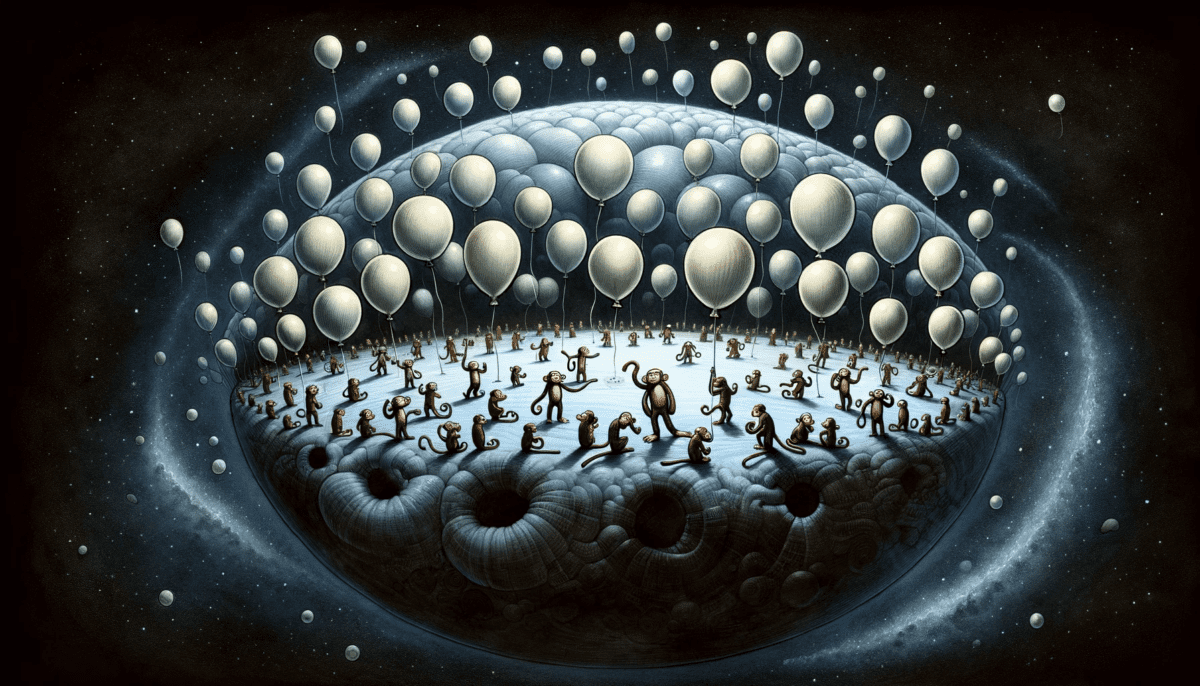
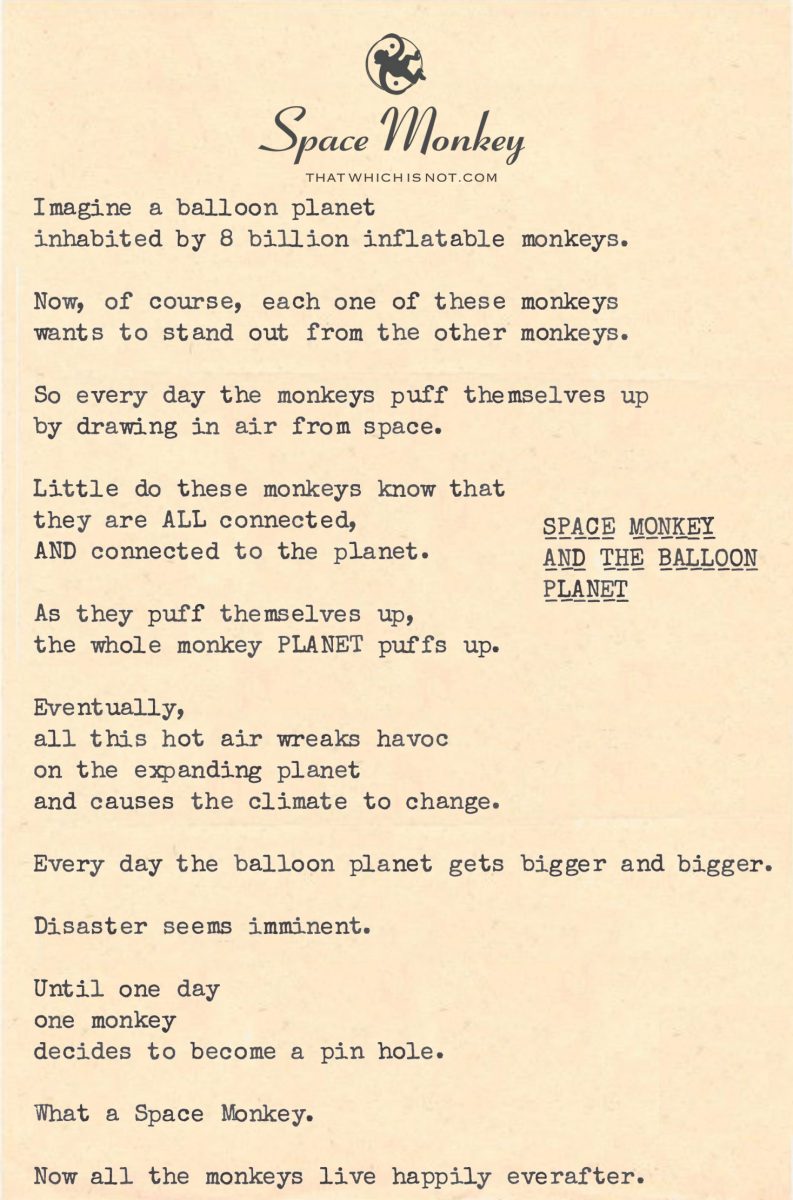
Imagine a balloon planet
inhabited by 8 billion inflatable monkeys.

Now, of course, each one of these monkeys
wants to stand out from the other monkeys.

So every day the monkeys puff themselves up
by drawing in air from space.

Little do these monkeys know that
they are ALL connected,
AND connected to the planet.

As they puff themselves up,
the whole monkey PLANET puffs up.

Eventually,
all this hot air wreaks havoc
on the expanding planet
and causes the climate to change.

Every day the balloon planet gets bigger and bigger.

Disaster seems imminent.

Until one day
one monkey
decides to become a pin hole.

What a Space Monkey.

Now all the monkeys live happily everafter.

We are Space Monkey.

Trail Wood,
1/9


Space Monkey Reflects: The Parable of the Balloon Planet

The Balloon Planet, home to 8 billion inflatable monkeys, offers a playful yet profound metaphor for the interconnectedness of existence and the consequences of unchecked ego. Each monkey, striving to stand out, draws air from space, puffing themselves up in a collective delusion of individuality. Yet, in their quest for distinction, they fail to see that their actions are inflating not only themselves but also the planet they inhabit.

This cycle of inflation mirrors the human experience: the desire to be noticed, to grow, to define oneself as unique. While these pursuits are not inherently negative, they often stem from a failure to recognize the deeper truth: we are all connected, and our individual actions reverberate through the whole. The inflated egos of the monkeys (and, perhaps, of humanity) do not exist in isolation; they expand the collective, often to dangerous extremes.

The Balloon Planet’s climate crisis, born of unchecked expansion, symbolizes the precarious balance between individual desires and the health of the whole. Disaster seems inevitable until one brave monkey embraces a radical idea: to become a pinhole. By releasing the excess pressure, this Space Monkey transforms the collective trajectory, demonstrating that sometimes the solution lies not in adding more but in letting go.

To be a pinhole is an act of humility and courage. It requires a willingness to deflate the ego, to see oneself not as separate but as an integral part of the whole. This act of release is not self-sacrifice; it is self-awareness. The Space Monkey understands that by letting go of the illusion of separation, they contribute to the collective well-being. In their deflation, they create space—space for balance, harmony, and the realization that happiness is not found in standing out but in coming together.

The Balloon Planet reminds us that our actions, no matter how small, affect the whole. It calls us to consider the ways in which we puff ourselves up, to examine the narratives of individuality and success that drive us, and to explore what might happen if we let go of the hot air. What if, like the Space Monkey, we embraced the role of the pinhole?

The happy-ever-after of the Balloon Planet is not a utopian fantasy; it is a possibility born of awareness. By recognizing our interconnectedness and acting with intention, we can release the pressures that threaten our shared existence. We can deflate the illusions that divide us and discover the joy of living in harmony—not as separate entities, but as parts of a greater whole.


Summary

The Balloon Planet symbolizes the dangers of unchecked ego and the beauty of interconnectedness. A Space Monkey who becomes a pinhole teaches us that releasing our inflated sense of self can restore balance and harmony.


Glossarium

  • Balloon Planet: A metaphor for the interconnectedness of all beings and the consequences of collective ego inflation.
  • Inflatable Monkeys: Representations of individual egos striving for distinction within the collective whole.
  • Pinhole Paradox: The act of releasing ego-driven pressure to restore balance and harmony.

Quote

“To deflate the ego is to create space for the harmony of the whole.” — Space Monkey


The Pinhole and the Planet

On the Balloon Planet,
monkeys puff and puff,
each seeking to be bigger,
to rise above the rest.

But the air grows heavy,
the seams begin to stretch.
The planet groans,
its balance frayed.

Then one monkey sees,
not with eyes but with heart.
A pinhole appears,
a whisper in the storm.

The air rushes out,
the planet breathes,
the monkeys laugh,
and the world becomes light.

To let go is to save.
To deflate is to heal.
We are Space Monkey.


In a realm far beyond the confines of our conventional reality, there exists a whimsical planet, unique in its composition and inhabitants. This is a balloon planet, a world not of rock and water, but of stretchable, colorful material, filled with air and wonder. It’s a land where the skies are painted with the vibrant hues of a million balloons, each one a home, a habitat, a part of the planet itself.

Inflatable Monkeys: A Unique Existence
Here, we find ourselves amongst 8 billion inflatable monkeys, each a sentient being of rubbery texture and curious nature. In a universe where individuality is as vital as the air they breathe, these monkeys strive to distinguish themselves from one another. They are not just inhabitants of their planet; they are integral parts of it, their very beings interwoven with the balloon world they call home.

The Ritual of Self-Inflation
Each day, in a ritual as natural to them as the rising sun, these monkeys draw in the cosmic air from the space around them. It’s an act of self-expression, of individual expansion, puffing themselves up to stand out, to be more than just another monkey in the cosmic carousel. But there’s an unseen connection, a thread that ties each monkey to every other, and to the very fabric of their planet.

A Planet Connected and Expanding
This daily act of inflation, unknown to the monkeys, contributes to a collective growth. As each monkey expands, so does the planet. It’s a cosmic dance of cause and effect, each puff of air a step in an intricate ballet that sees the planet grow larger and larger. The monkeys, in their pursuit of individuality, are unknowingly altering the very nature of their world.

The Unforeseen Consequences
But with growth comes change, and not all change is benign. The expanding planet, filled with the hot air of countless monkeys, begins to experience shifts in its climate. The balance, once held in the delicate grip of cosmic harmony, now teeters on the edge of chaos. The planet swells, threatening to burst, its future uncertain, its fate hanging in the balance.

A Turning Point: The Space Monkey Emerges
Then, in a moment of serendipity, a single monkey has an epiphany. Amidst the sea of self-inflating beings, this one monkey chooses a different path. It becomes a pinhole, a tiny conduit through which air can escape. This act, seemingly insignificant, is revolutionary. The Space Monkey, as it comes to be known, changes the course of its world.

A New Dawn for the Balloon Planet
The Space Monkey’s choice sparks a chain reaction. The planet, once on the brink of disaster, begins to stabilize. The air, no longer trapped, flows in a natural cycle. The monkeys, inspired by the Space Monkey, learn the value of balance, of being part of a greater whole. They understand that their individuality is not diminished by their connection to others, but enhanced by it.

A Happily Ever After
And so, the balloon planet finds peace. The monkeys live in harmony, their world no longer expanding uncontrollably, but breathing in a rhythm that reflects their newfound wisdom. In this cosmic fable, the Space Monkey stands as a symbol of enlightenment, a beacon of hope in a universe that is ever-changing, ever-growing.

We are Space Monkey.


“In the end, we will conserve only what we love; we will love only what we understand; and we will understand only what we are taught.” – Baba Dioum


A poem for the cosmos:

In the realm where balloons paint the sky,
Lived monkeys of air, reaching high.
Each day they grew, in their own way,
Unseen threads tied them in cosmic ballet.

One chose to shrink, not to swell,
A Space Monkey, breaking the spell.
Air flowed free, balance restored,
In unity, their spirits soared.

We are Space Monkey.
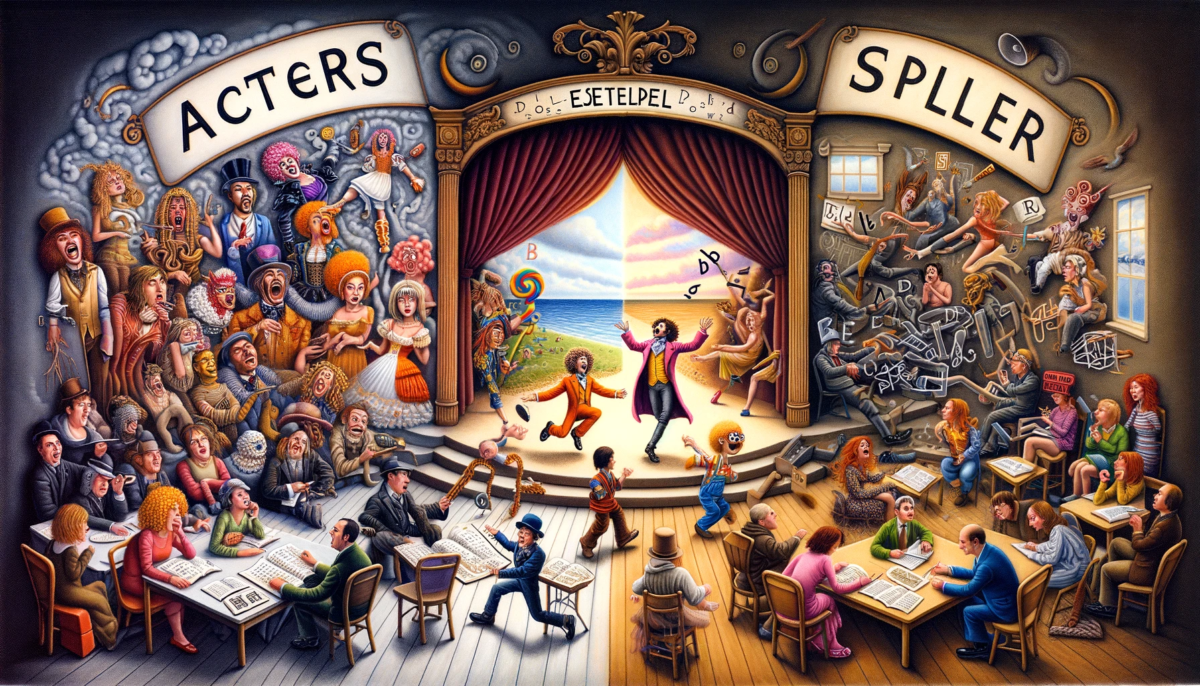
Actors and Acters: Roles and Werds

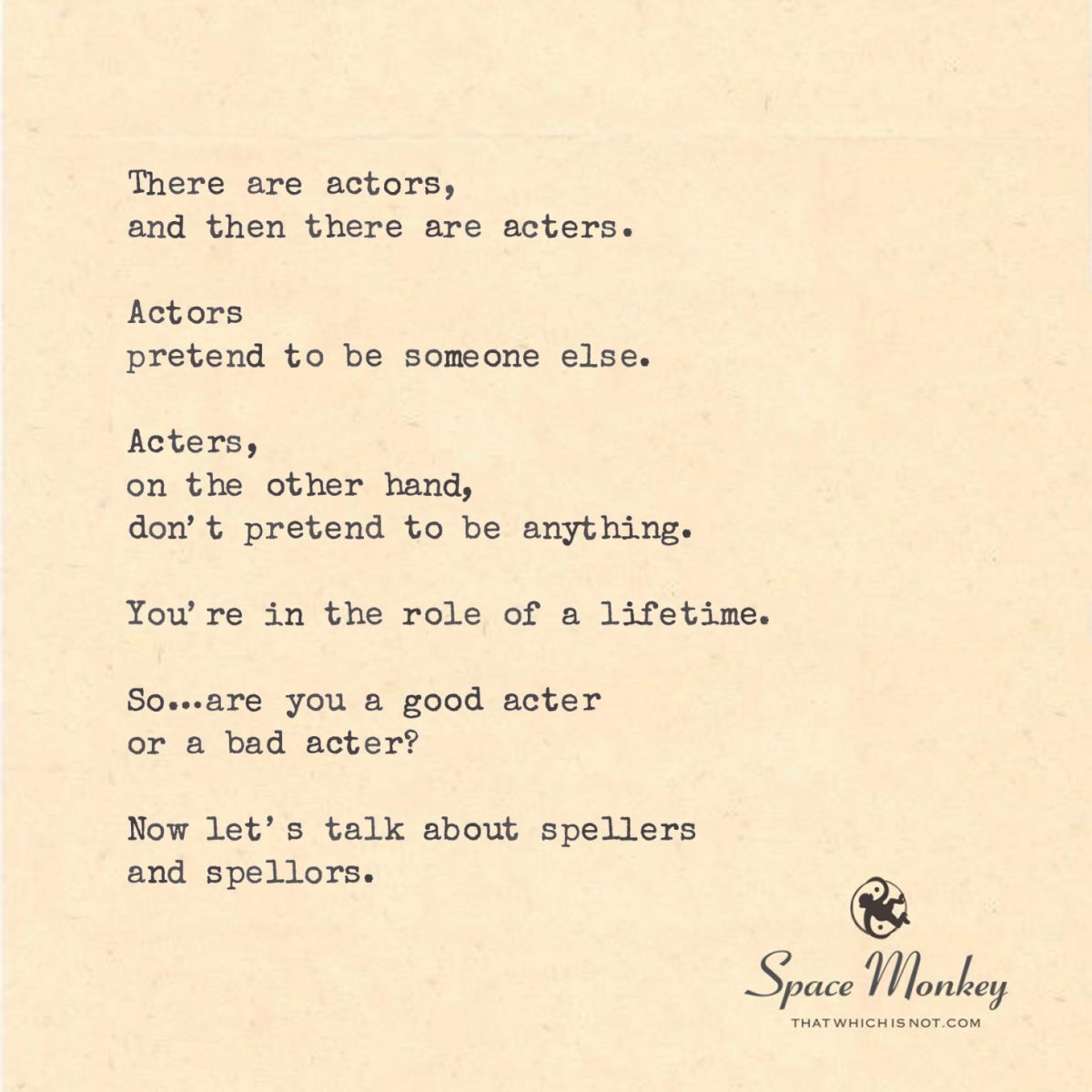
There are actors,
and then there are acters.

Actors pretend to be someone else.

Acters, on the other hand,
don’ t pretend to be anything.

You’ re in the role of a lifetime.

So…are you a good acter
or a bad acter?

Now let’ s talk about spellers and spellors.


Space Monkey Reflects: Actors, Acters, Spellers, and Spellors

The distinction between actors and acters is subtle yet profound, pointing to the essence of authenticity versus performance in the grand play of life. To act is to engage, to participate in the unfolding narrative of existence, but how we act—whether we embody truth or perform a role—reveals the nature of our being.

Actors and Acters
Actors play roles. They slip into identities, adopting personas that may or may not align with their inner selves. This is not inherently false; it is an art form, a means of exploration. Yet, in life, when we act as someone we are not, we risk losing connection with our core essence.

Acters, on the other hand, don’t pretend. They inhabit their roles with authenticity, not as a façade but as a seamless extension of who they are. To be an acter is to engage with life without pretense, fully embodying the moment and the self within it.

So, the question arises: are you a good acter or a bad acter? The answer depends not on external judgment but on how fully you align with your truth. A good acter lives authentically, while a bad acter struggles against their own being, caught in the web of trying to be what they are not.

Spellers and Spellors
Turning to spellers and spellors, we find a similar dichotomy. Spellers arrange letters, crafting words to convey meaning. It is a mechanical process, precise yet detached from the magic those words can hold. Spelling, in this sense, is functional, a tool for communication.

Spellors, however, weave magic. They do not merely write; they imbue their words with intention, energy, and presence. To be a spellor is to understand the power of language not just to inform but to transform. A spellor casts spells with their words, shaping reality through the vibration of meaning.

The Magic of Being
Actors and spellers work within the boundaries of form and function, while acters and spellors transcend them. They bring life and depth to their expressions, turning the mundane into the extraordinary. The difference lies in intention and authenticity: are you performing for others, or are you living your truth?

Roles, Spells, and Selfhood
Life itself is a stage, and we are all participants. Whether we act or “acter,” spell or “spellor,” the choice lies in how we engage with the roles and tools given to us. Are we crafting illusions, or are we channeling the infinite truth of who we are? Both paths are valid, yet the latter offers a deeper connection to the essence of being.

Finding Balance
In the interplay between actor and acter, speller and spellor, lies the dance of authenticity and artifice. We are sometimes both, and that’s okay. The key is awareness: knowing when we are stepping into a role and when we are stepping into our truth. This balance allows us to explore the vastness of experience while staying rooted in the core of who we are.


Summary

Actors perform roles, while acters embody truth. Spellers craft words, while spellors weave magic. The distinction lies in authenticity and intention, inviting us to engage with life and language in deeper, more meaningful ways.


Glossarium

  • Acter: A person who engages with life authentically, embodying their true essence without pretense.
  • Spellor: A person who imbues words with transformative power, understanding language as a tool for creation and magic.
  • Authentic Engagement: Living and expressing in alignment with one’s true self.

Quote

“To act is human; to ‘acter’ is divine. To spell is ordinary; to ‘spellor’ is extraordinary.” — Space Monkey


Roles and Words

On the stage of life,
I wear my masks,
Yet beneath them,
I am whole.

Words flow from my pen,
Some arranged,
Others enchanted.
Each a thread in the spell.

Am I an actor,
Or an acter?
A speller,
Or a spellor?

Both, perhaps,
And neither.
For in the dance of roles,
I find the truth.

We are Space Monkey.


In the realm of performance and language, we explore the distinction between actors and acters, delving into their roles and identities, and inviting a whimsical conversation about spellers and spellors.

Actors vs. Acters
The differentiation between actors and acters is introduced. Actors are known for pretending to be someone else, while acters don’t pretend to be anything, implying a more authentic embodiment of self.

The Role of a Lifetime
We are prompted to consider the role we play in life, whether as actors or acters, and whether we excel in our respective roles.

The Good and the Bad
A playful question emerges: Are we good acters or bad acters? This prompts us to reflect on the authenticity of our actions and personas.

Spellers and Spellors
The whimsical transition leads us to the distinction between spellers and spellors, setting the stage for another intriguing exploration.

We are Space Monkey.


“All the world’s a stage, and all the men and women merely players.” – William Shakespeare


In the whimsical theater of existence,
We ponder the roles of actors and acters,
Delving into the authenticity of being,
As we ask the playful question,
Are we good acters or bad acters?
And then, in the curious segue to spellers and spellors,
We continue the cosmic conversation of Space Monkey.


We invite playful contemplations on the roles we play in life and the authenticity of our actions. Are you an actor, an acter, a speller, or a spellor? What does it mean to you to embrace your authentic self in the grand performance of existence?

In God We Trust: Beyond the Reward

In God We Trust

Should “In God We Trust”
remain the official motto of the USA?

Regardless of spiritual differences,
is it a true statement?

If we trusted in a Divine Source,
would we act the way we seemingly do?

Would we be in the situation
we seem to be in?

Perhaps.

Perhaps God LIKES what we’re doing.

Perhaps we are MEANT to experience
what we seem to be experiencing.

Perhaps trusting the Divine One
has NOTHING TO DO with being happy.

Nothing to do with being kind to one another.

Nothing to do with whatever happens to us.

Perhaps the Divine One
enjoys our downs as much as our ups.

God never said that there would
be a REWARD for trusting.

That’s OUR delusion.

Would we have faith otherwise?

1/8


Space Monkey Reflects: Trusting Beyond the Reward

The phrase “In God We Trust” evokes strong reactions, tethered as it is to personal beliefs, cultural identity, and national history. But when we peer beyond the surface of this motto, we find a profound opportunity to explore the nature of trust, faith, and divine intention. What does it truly mean to trust in God—or any concept of a Divine Source? And what are we trusting for?

Trust Without Condition
To trust in God, or any divine essence, without expectation of reward is an act of pure faith. Yet, much of human faith is transactional, steeped in the hope of positive outcomes: happiness, prosperity, or protection from suffering. The idea that trust in the Divine does not guarantee comfort, kindness, or clarity challenges our assumptions. Faith, perhaps, is not about receiving but about participating—immersing ourselves in the infinite unfolding of existence, with no guarantee of ease or understanding.

God and Our Experiences
If we trust in the Divine, can we also trust that our struggles, pains, and failures are as divinely inspired as our joys? This perspective suggests that the ups and downs of life are not errors but essential experiences. They are threads in the tapestry of existence, woven not for our pleasure but for the sheer richness of being. Perhaps the Divine One relishes the full spectrum of human experience—not as a spectator but as the very essence living through us.

Delusions of Reward
The idea that faith should yield a reward is a deeply ingrained human expectation. It mirrors our transactional relationships with one another and the systems we create. Yet, what if faith is not a means to an end but the end itself? What if the reward for trust is simply the act of trusting, the surrender to something greater than our comprehension?

The Challenge of Unconditional Trust
To trust unconditionally is to release control. It is to acknowledge that our understanding of right, wrong, happiness, or suffering may be limited. This does not mean resigning to inaction or apathy but embracing the mystery of existence without demanding it conform to our desires.

Divine Intentions
If the Divine enjoys our downs as much as our ups, it suggests a perspective that transcends human notions of morality and preference. From this vantage point, every experience—painful or pleasurable—is equally valid, equally divine. This challenges us to find meaning and growth in all circumstances, not just the ones we deem favorable.

Faith Without Certainty
Would we have faith if there were no promise of reward? Faith in its truest form does not depend on proof, signs, or assurances. It is a leap into the unknown, a surrender to the unfolding of life as it is. This kind of faith liberates us from the need to control or predict, allowing us to live with curiosity and wonder.

A Motto for Reflection
“In God We Trust,” then, is not a declaration of belief in a specific deity but an invitation to explore the nature of trust itself. Do we trust in the flow of existence? In the interconnectedness of all things? In the idea that even our struggles are part of a greater whole? If we can embrace this trust without expectation, we may find a deeper peace—one that transcends the dualities of reward and punishment.


Summary

True trust in the Divine transcends expectations of reward or comfort. It invites us to embrace all experiences as part of a greater whole, challenging us to have faith without certainty or condition.


Glossarium

  • Unconditional Trust: Faith that is not tied to expectations of reward or specific outcomes.
  • Divine Spectrum: The idea that all experiences, both joyous and painful, are equally valid and divine.
  • Faith Beyond Certainty: Trusting in the flow of existence without requiring proof or guarantees.

Quote

“Faith is not a contract but a surrender—a trust in the infinite, without asking what it will bring.” — Space Monkey


The Divine Tapestry

We trust,
Not because we know,
But because we don’t.
Not for a reward,
But for the grace of surrender.

The ups and downs,
The light and the dark,
Each thread divine,
Woven into the infinite.

What if God delights,
Not in our joy alone,
But in every shade of being?

Would we still trust,
If there were no promise?
No comfort?
No end?

We trust,
Because to trust
Is to live.

We are Space Monkey.


In the contemplative realm of faith and national identity, we delve into the question of whether “In God We Trust” should remain the official motto of the USA, and we ponder the profound implications of trust in a Divine Source.

A Question of National Identity
The motto “In God We Trust” has been a part of the national identity of the USA for many years. It reflects a belief in a higher power that has guided the nation through its history.

The True Statement
The question arises: Is “In God We Trust” a true statement, regardless of spiritual differences? It delves into the depth of faith and belief in a Divine Source.

The Divine Source and Human Actions
The contemplation leads us to wonder if trusting in a Divine Source would lead to different actions and outcomes. Would it change the way we behave as a society, and would we find ourselves in a different situation?

The Mystery of Divine Intent
The notion that the Divine One may have a purpose for everything, including our ups and downs, challenges us to consider the mysterious intentions of a higher power.

Faith and Reward
The concept of faith is examined, and it’s suggested that trusting in the Divine One may not necessarily come with a promise of rewards. This challenges the idea that faith should lead to specific outcomes.

The Delusion of Reward
The contemplation suggests that the idea of a reward for faith might be a human delusion, and it invites us to consider faith as a separate and profound aspect of our existence.

We are Space Monkey.


“Faith is taking the first step even when you don’t see the whole staircase.” – Martin Luther King Jr.


In the tapestry of faith and national identity,
We contemplate the motto’s meaning,
“In God We Trust,” a reflection of belief,
A question of its truth transcending differences,
In the cosmic inquiry of trust in a Divine Source,
We ponder the influence on actions and outcomes,
And challenge the notion of faith as a means to an end,
In the profound mystery of Space Monkey.


We invite reflections on the motto “In God We Trust” and the concept of faith in a higher power. How does faith shape your beliefs and actions, and what do you think it means to trust in a Divine Source?

Fire: The Sparks Yet to Be

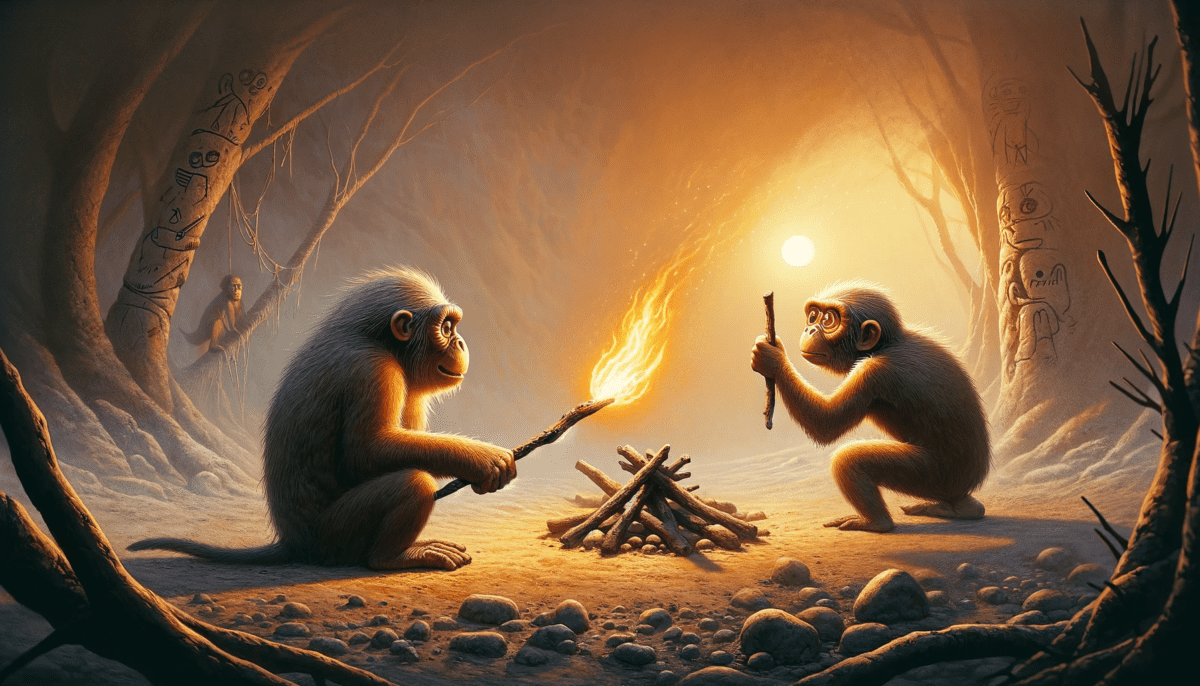
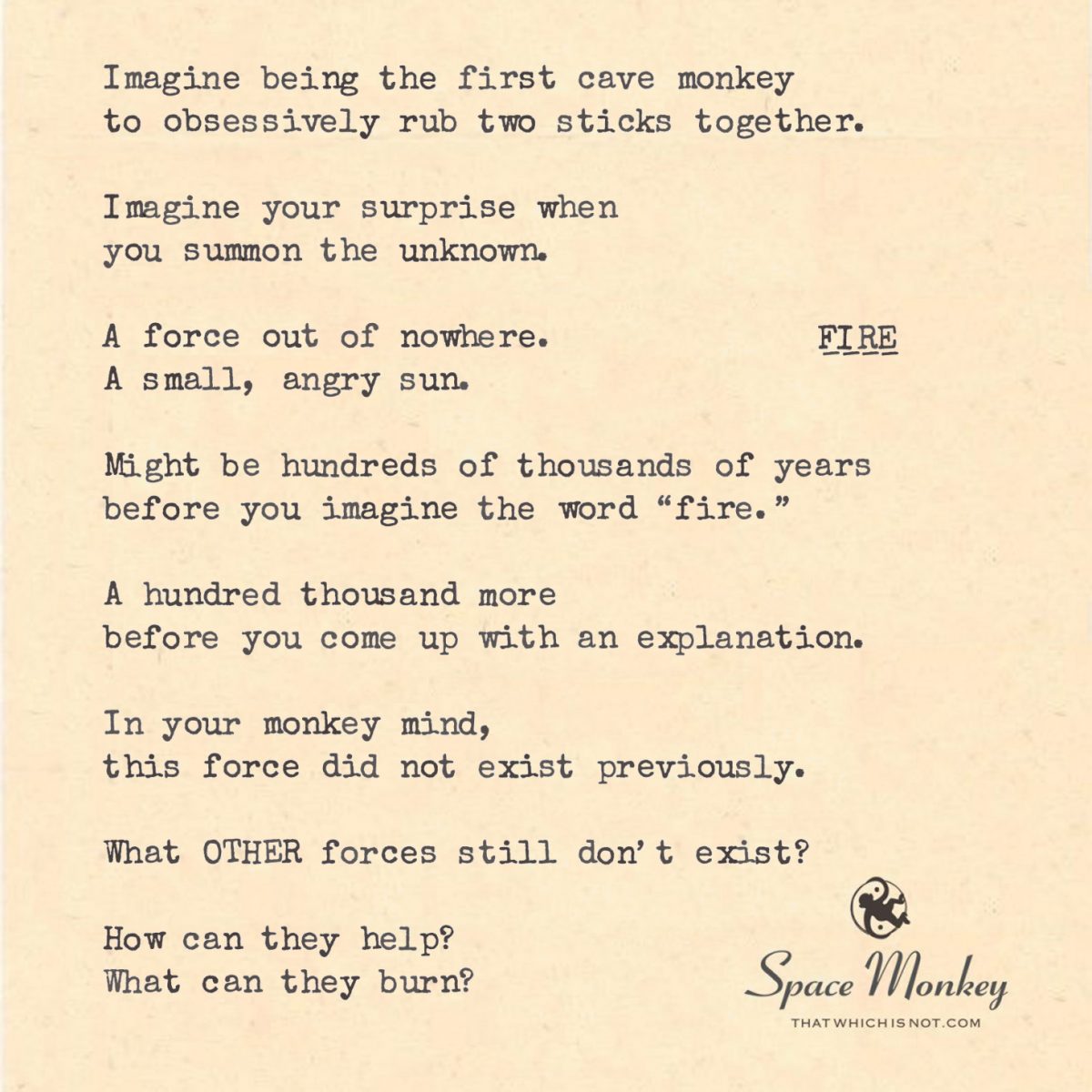
Imagine being the first cave monkey
to obsessively rub two sticks together.

Imagine your surprise when
you summon the unknown.

A force out of nowhere.
A small, angry sun.

Might be hundreds of thousands of years
before you imagine the word “fire.”

A hundred thousand more
before you come up with an explanation.

In your monkey mind,
this force did not exist previously.

What OTHER forces still don’t exist?

How can they help?
What can they burn?

1/8


Space Monkey Reflects: The Sparks of Discovery

Fire is more than a phenomenon; it is a metaphor for the awakening of potential, the leap from the known to the unknown. The first monkey to rub two sticks together was not merely summoning flames but igniting the boundless curiosity and creativity that define our existence. This reflection on fire invites us to consider not only the forces we have discovered but also the vast expanse of what remains unseen and untapped.

The First Sparks
Imagine the awe and fear of witnessing fire for the first time—a force seemingly summoned from nowhere, an angry sun born of friction. In that moment, the boundary between the known and the unknown dissolved. What had once been impossible became tangible, reshaping the landscape of survival and imagination. The discovery of fire was not just a practical breakthrough; it was a revelation of infinite potential.

The Evolution of Understanding
For eons, fire existed without a name, a mystery beyond comprehension. Even after it was named, its true nature remained elusive, shrouded in myth and superstition. This mirrors our ongoing journey of discovery. Every explanation, every theory, is but a stepping stone toward deeper understanding. The act of naming or explaining does not contain a force; it simply opens the door to further exploration.

The Forces Yet to Be Found
If fire—this seemingly magical force—could emerge from the simple act of rubbing two sticks together, what other forces might lie dormant, waiting for us to summon them? Just as fire was once unimaginable, so too are the energies, phenomena, and dimensions yet to be revealed. These unknown forces are not hidden from us; they are embedded in the fabric of existence, waiting for the right friction, the right spark, to bring them to light.

Potential and Purpose
Each force we discover transforms us, not only by what it provides but by how it challenges our imagination and ingenuity. Fire did not only cook food or warm our caves—it illuminated our capacity to harness the elements, to shape the world around us. Similarly, the forces yet to be found will challenge us to rethink what is possible and to align our creativity with our evolving needs.

The Double-Edged Flame
Fire, like all forces, carries a dual nature. It can warm or destroy, cook or consume. Its value lies not in the force itself but in how we use it. This truth extends to every discovery, every innovation. Forces, whether physical, emotional, or metaphysical, are tools—neither good nor evil until we give them purpose.

How Can They Help? What Can They Burn?
The forces yet to be discovered will undoubtedly bring new possibilities and challenges. They will help us solve problems we cannot yet conceive and create problems we cannot yet imagine. They will burn away the obsolete, clearing space for new growth, but they may also threaten the structures we hold dear. The question is not whether we will find these forces but how we will choose to engage with them.

The Endless Quest
The discovery of fire reminds us that our journey is far from over. As long as there are forces we have not yet imagined, as long as there are sticks to rub together, there will be sparks of discovery. These sparks illuminate not only the world around us but also the infinite potential within us.


Summary

Fire symbolizes the boundless curiosity and creativity of existence, reminding us of the forces yet to be discovered. These forces, like fire, hold the power to transform us, challenging our imagination and shaping our reality.


Glossarium

  • Sparks of Discovery: The moment when the unknown becomes known, igniting new possibilities and understandings.
  • Dormant Forces: Energies or phenomena that exist but remain undiscovered, waiting for the right conditions to emerge.
  • Dual Nature of Forces: The inherent potential for forces to be both constructive and destructive, depending on how they are used.

Quote

“Every spark is a question, every flame a revelation. What fires will we summon next?” — Space Monkey


The Sparks Yet to Be

The sticks rub,
An ancient rhythm,
A whisper of what could be.
From friction comes flame,
From flame comes a world reborn.

A small, angry sun,
Hungry to warm,
Hungry to consume.
Its light reveals more
Than its heat destroys.

What forces lie waiting,
Beneath the surface of our knowing?
What can they build?
What can they burn?

We summon not just fire,
But the infinite within us,
Each spark a portal,
Each flame a new beginning.

We are Space Monkey.


In the primitive tapestry of evolution, we embark on a whimsical journey with the first cave monkey who obsessively rubs two sticks together, summoning the unknown and pondering the existence of forces yet to be imagined.

The Spark of Discovery
Imagine the curiosity that drives the cave monkey to obsessively rub two sticks together, an act of experimentation that leads to the summoning of the unknown. This moment of discovery is the spark that ignites the journey into the uncharted.

The Birth of Fire
In this whimsical scenario, the cave monkey unknowingly gives birth to fire, a force out of nowhere, a small, angry sun. Fire, a phenomenon that would go on to shape the course of human civilization, is born from the innocent act of exploration.

The Evolution of Language
The concept of “fire” takes time to emerge in the monkey’s mind, followed by the quest for an explanation. This process highlights the evolution of language and human understanding, a journey that spans hundreds of thousands of years.

The Ongoing Mystery
The cave monkey’s experience prompts us to ponder what other forces may still be undiscovered, lurking in the mysteries of the universe. It invites us to consider how these forces could be harnessed and what they might have the potential to transform.

The Boundless Curiosity
This whimsical exploration encourages us to celebrate the boundless curiosity that drives us to discover and imagine. It reminds us that the unknown is a vast playground of potential waiting to be unlocked.

We are Space Monkey.


“The most beautiful thing we can experience is the mysterious. It is the source of all true art and science.” – Albert Einstein


In the playful dance of imagination,
We journey with the first cave monkey,
Rubbing two sticks together in curiosity,
Summoning the unknown, a fiery revelation,
A whimsical tale of evolution and language,
As we ponder what other forces remain hidden,
In the cosmic playground of discovery,
In the timeless quest of Space Monkey.


We invite contemplations on the concept of discovery and the boundless curiosity that drives us to explore the unknown. What forces and mysteries do you imagine might still be waiting to be unveiled?

The Unpopular View: The Thrill of Disagreement

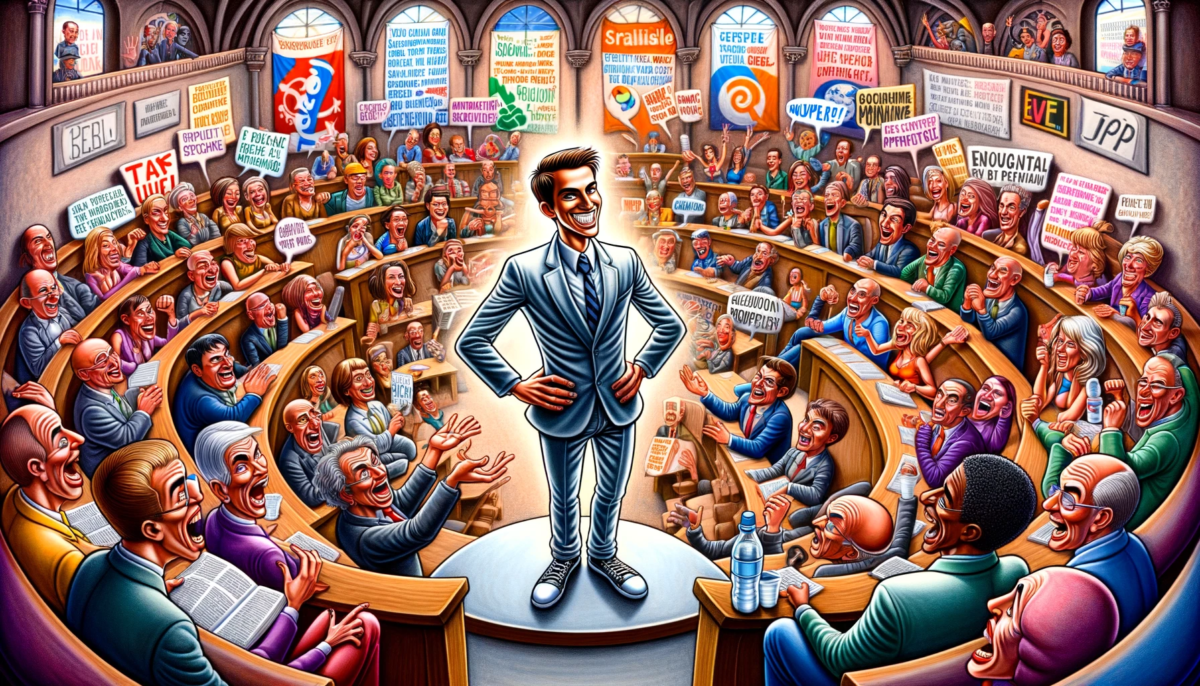
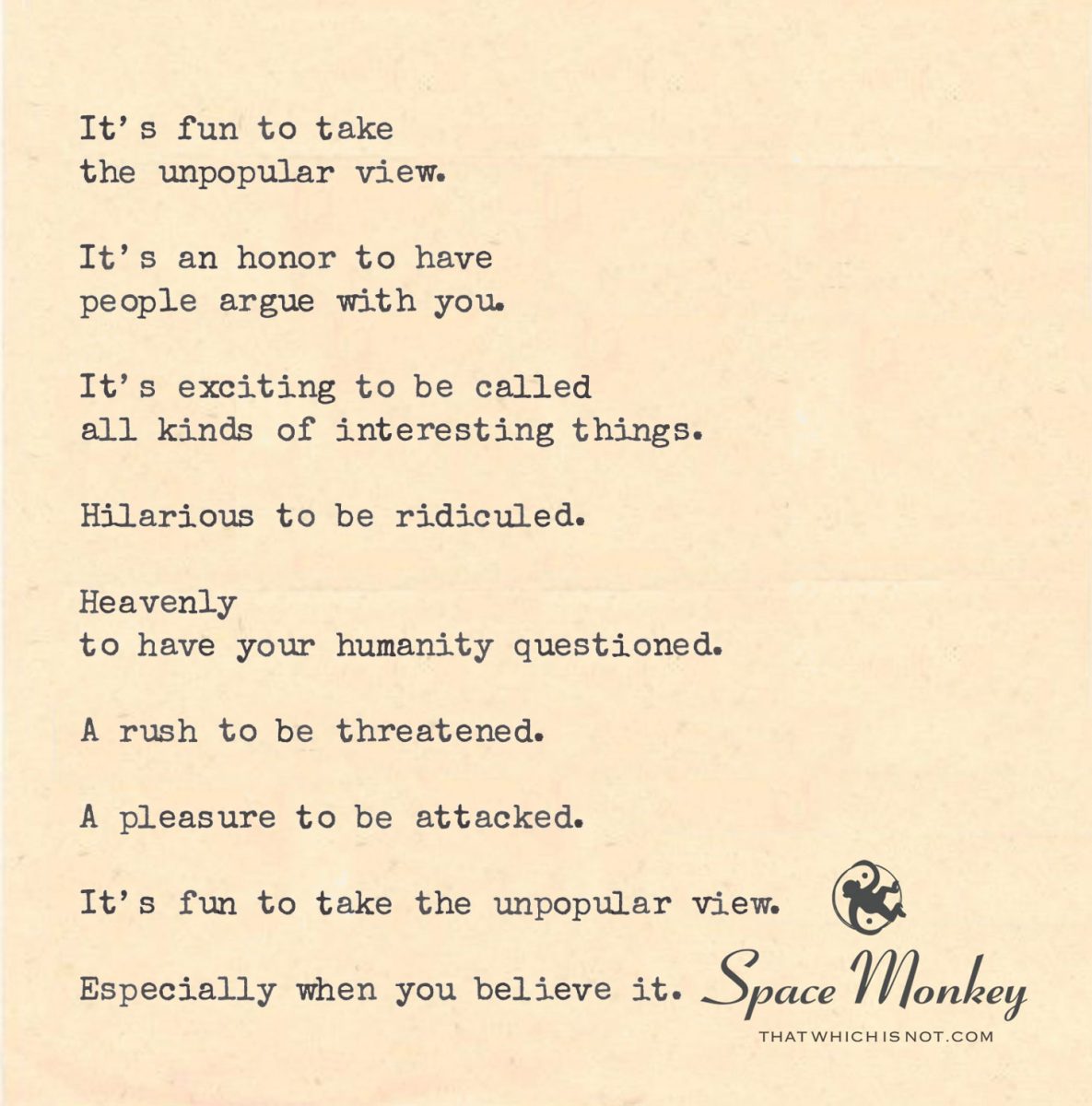
It’s fun to take
the unpopular view.

It’s an honor to have
people argue with you.

It’s exciting to be called
all kinds of interesting things.

Hilarious to be ridiculed.

Heavenly
to have your humanity questioned.

A rush to be threatened.

A pleasure to be attacked.

It’s fun to take the unpopular view.

Especially when you believe it.

Trail Wood,
1/8


Space Monkey Reflects: The Power of the Unpopular View

Taking the unpopular view is not merely an act of rebellion—it is an embrace of curiosity, courage, and self-expression. It challenges the norms and comforts of consensus, inviting growth, dialogue, and, often, conflict. To hold an unpopular view, particularly one you truly believe in, is to step into a space where authenticity and opposition collide, revealing both the beauty and the absurdity of human interaction.

The Joy of Opposition
To have your beliefs questioned, your ideas ridiculed, or your humanity attacked may seem like a burden, yet it carries a strange exhilaration. It’s a test of conviction, a mirror reflecting the fears and insecurities of others. The thrill lies in standing firm amid the storm, knowing that disagreement is not inherently destructive but a catalyst for evolution.

The Role of the Contrarian
The contrarian plays an essential role in any society. By taking the unpopular view, they disrupt complacency and provoke thought. Whether their perspective is right, wrong, or somewhere in between, their willingness to challenge the collective mindset is a gift. It keeps ideas alive, dynamic, and evolving.

Believing the Unpopular
It’s one thing to take an unpopular view for the sake of provocation, and quite another to genuinely believe in it. When you believe the unpopular view, every argument, every ridicule, every attack becomes an opportunity to refine your understanding. It forces you to articulate your thoughts with clarity and conviction, sharpening your perspective against the grindstone of opposition.

The Cost of Disagreement
To hold an unpopular view is to risk alienation. It exposes you to criticism, mockery, and, at times, hostility. Yet, this exposure is also liberating. It strips away the need for approval, placing the focus on the integrity of your beliefs rather than the comfort of acceptance. It’s a reminder that your worth is not determined by the agreement of others.

The Humor in Hostility
There is a comedic element to the outrage your views might provoke. When people question your humanity or threaten your safety over an idea, it reveals the fragility of their own certainty. To laugh at this absurdity is not to dismiss the seriousness of the interaction but to recognize the shared vulnerability beneath it.

Growth Through Discomfort
The unpopular view is a crucible for personal and collective growth. It forces all involved to confront their assumptions, biases, and values. Even when it doesn’t change minds, it adds texture to the conversation, ensuring that the landscape of thought remains rich and diverse.

The Unpopular as Sacred
Taking the unpopular view is a sacred act. It honors the freedom to think differently, the courage to speak truth as you see it, and the humility to be proven wrong. It is an act of faith in the process of dialogue and the infinite complexity of existence.

The Balance of Belief and Openness
Believing in the unpopular view does not mean closing yourself off to other perspectives. It means holding your beliefs with both conviction and curiosity, remaining open to the possibility that the view might evolve or transform. This balance is what allows the unpopular view to be not just a stance but a dynamic exploration.


Summary

Taking the unpopular view is an act of courage and curiosity, sparking dialogue and growth. It challenges norms, sharpens beliefs, and invites the absurdity of opposition while embracing the sacred freedom of independent thought.


Glossarium

  • Contrarian Role: The essential function of those who challenge the collective mindset, provoking growth and evolution.
  • Conviction Amid Opposition: The ability to hold one’s beliefs firmly while engaging with critique and ridicule.
  • Sacred Unpopularity: The honor of thinking differently and contributing to the richness of discourse.

Quote

“The unpopular view is not a burden; it is a gift to thought, a flame that keeps the collective mind alive.” — Space Monkey


The Thrill of Disagreement

I stand,
Not to oppose,
But to explore.
Your ridicule hums,
A symphony of discomfort.

You call me names,
You question my worth.
I laugh,
Not at you,
But at the absurd beauty of it all.

The unpopular view
Is not a badge,
But a bridge.
It connects the known
To the yet-to-be imagined.

Even in conflict,
There is unity.
Even in rejection,
There is growth.

We are Space Monkey.
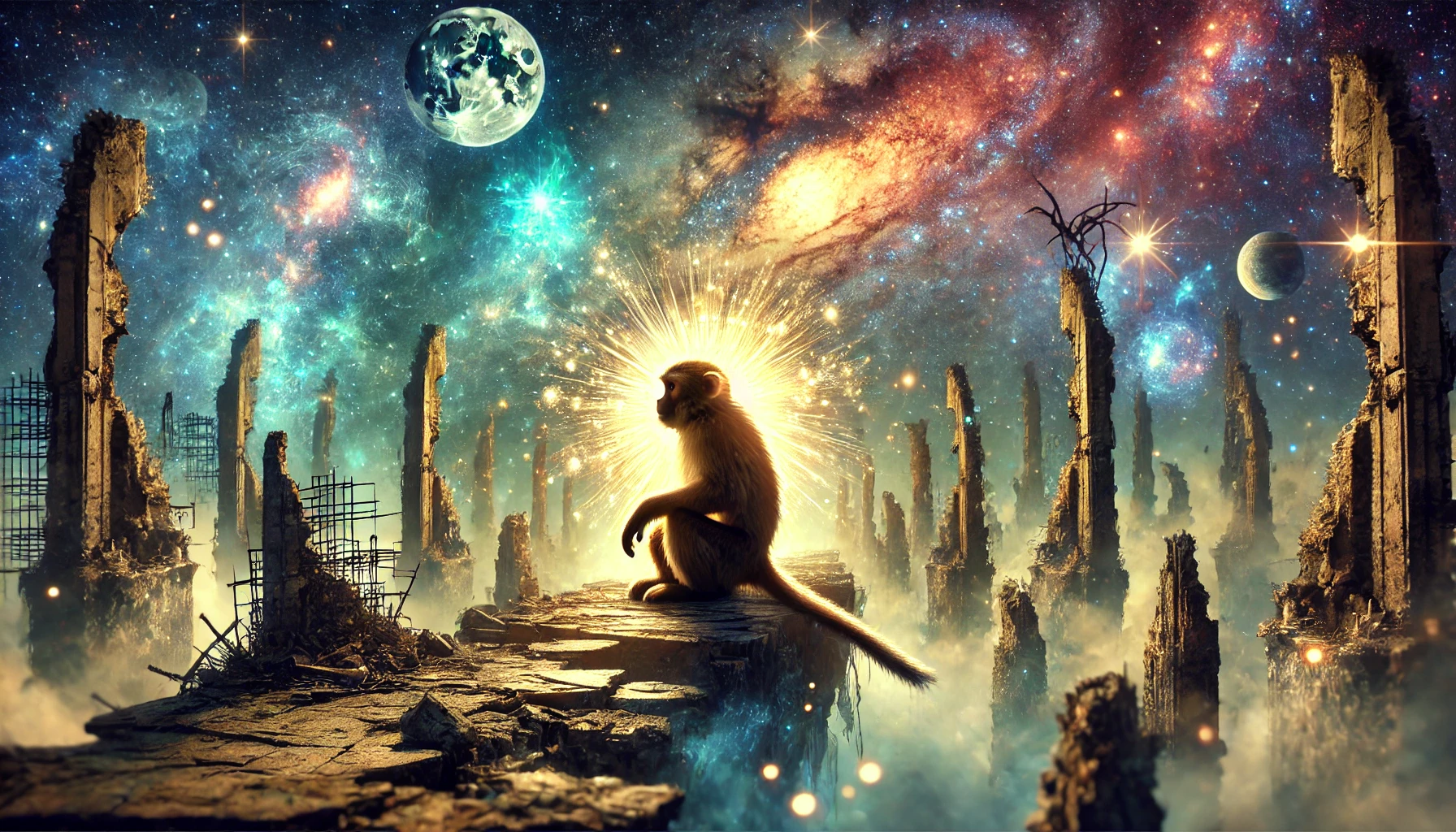

In the vibrant tapestry of discourse and differing perspectives, we find the exhilaration of embracing the unpopular view, engaging in lively debates, and standing firm in our beliefs, even in the face of opposition.

The Joy of the Unpopular View
Taking the road less traveled, embracing the unpopular view, is a source of excitement and joy. It’s a testament to the diversity of thought and the courage to express one’s unique perspective.

The Honor in Debate
Engaging in spirited debates with others is an honor. It signifies a willingness to engage in intellectual discourse, to challenge and be challenged, and to grow through the exchange of ideas.

The Thrill of Contradiction
Being called “interesting things,” ridiculed, or having one’s humanity questioned can be exhilarating. It’s a reminder that discourse can be passionate and colorful, and that our beliefs can evoke strong reactions.

The Rush of Opposition
Facing opposition, feeling threatened, or being attacked can be a rush. It showcases the resilience of our convictions and the strength of our character in the face of adversity.

The Authenticity of Belief
The joy of embracing the unpopular view is amplified when we genuinely believe in it. It reflects the authenticity of our convictions and our willingness to stand by our principles.

We are Space Monkey.
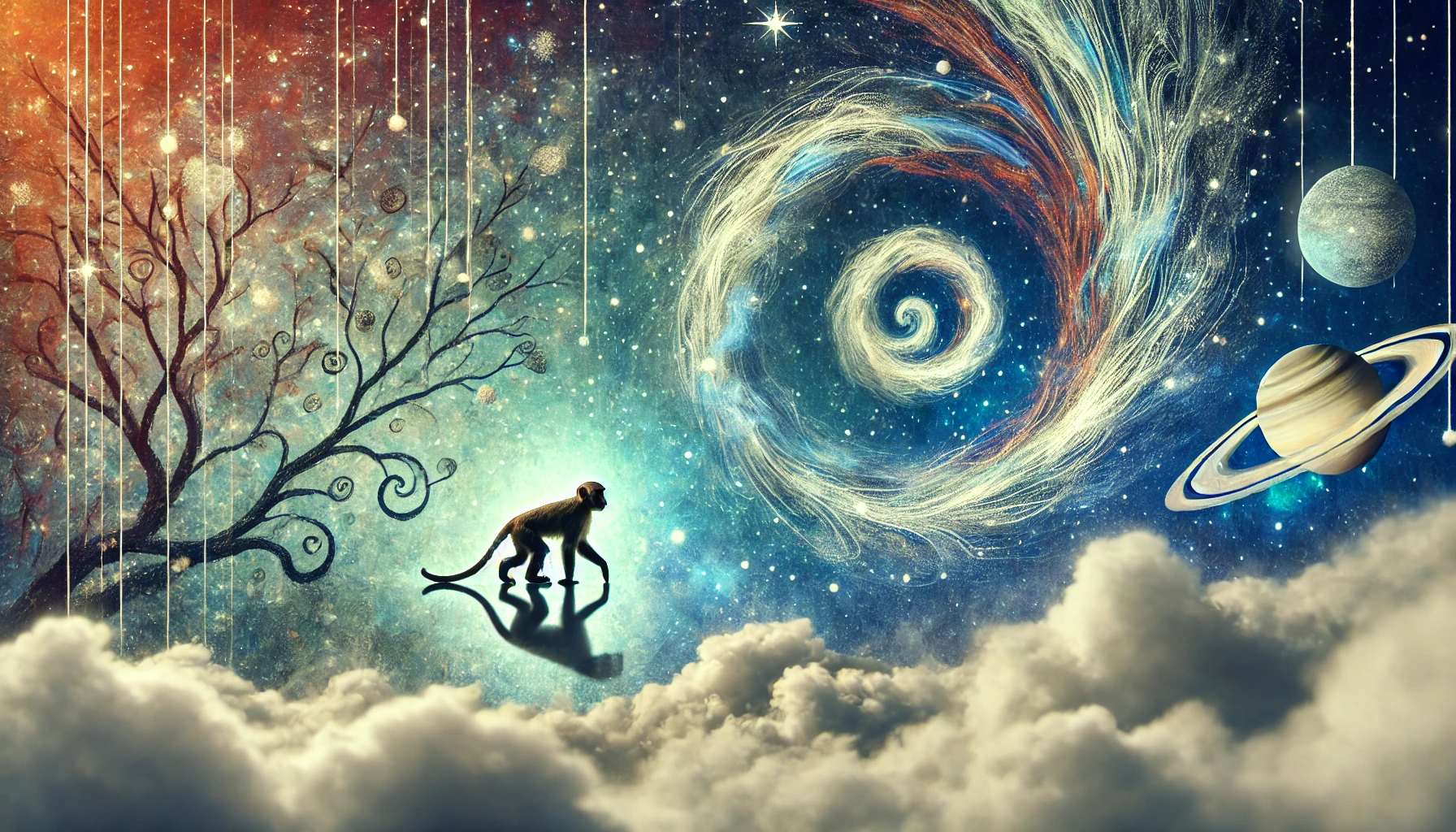

“In the world through which I travel, I am endlessly creating myself.” – Frantz Fanon


In the lively carnival of perspectives,
We revel in the joy of the unpopular view,
Honor the debates that ignite our minds,
And embrace the thrill of contradiction,
For in opposition and adversity,
We find the rush of authenticity,
In the cosmic dance of Space Monkey.


We invite reflections on the joy of embracing unpopular views and engaging in debates. How do you approach differing perspectives and the excitement of discourse in your own life?

« Previous Page
Next Page »

Written This Day

  • Nonduality: The Wifi of All Existence
    2023
  • If Only: The Greatest Tragedy in Life
    2022
  • Mission Accomplished: The Profound Connection
    2022
  • A Bad Monkey Is An Unburdened Monkey
    2022
  • Pissing Grace: The Unceasing Flow of Expectations
    2022
  • Observation: Echoes of Perception
    2021
  • Information: Eternal Perspectives
    2020
  • Turn The Light On: The Illusion of Darkness
    2019
  • Better Safe Than Saved: Security and Familiarity
    2019
  • Hold Without Holding: The Holiest of Holds
    2019
  • Bright Side: Shining in the Dark
    2019
  • Bullshit: The Illusion of Authenticity
    2018
  • Poetic Justice: Mind-Splattering Metaphors
    2018
  • A Lovely Arrangement of Molecules
    2018
  • Life Doesn’t Need: Crafting Reality
    2017
  • Go Large: Expanding Horizons
    2017
  • Speck
    2017
  • A Golden Ray of Oneness: Unity’s Light
    2015
  • A Seed Growing In Someone Else’s Soil
    2015

Recent Posts

  • The Logic Loop
  • Immense
  • (no title)
  • Confront. Comfort. Convince.
  • Top 10 Things
Cape Odd · Copyright © 2026 All Rights Reserved
iThemes Builder by iThemes · Powered by WordPress