• Who Is The Man?
  • Who Is The Monkey?
  • What is Nexistentialism?
  • Poke The Primate

Cape Odd

Home of The Space Monkey Journals

The Bad Buddhist: The Absurdist Awakening

I know a monkey who has done
and seen many things.

To quote this monkey:

“I was a Buddhist for three years,
but it didn’t work for me.”

I died laughing, but only to my self.

If the monkey
were truly a Buddhist,
would the simian not see
the irony of this statement?

Is there such a thing as a “Bad Buddhist?”

My monkey is also sometimes a Buddhist,
and so I am told not to judge.

Instead I pass the story on
for you to contemplate. Or not.

Trail Wood,
12/20


Space Monkey Reflects: The Bad Buddhist

The phrase “Bad Buddhist” invites both laughter and reflection. What does it mean to fail at a practice designed to embrace imperfection? Is there such a thing as being a “bad” anything, especially in the context of spirituality?

The monkey who declares, “I was a Buddhist for three years, but it didn’t work for me,” offers a profound irony worth exploring. Buddhism isn’t a tool with an on/off switch, nor is it a solution to life’s challenges. It is a path, a way of being that invites you to see the world and yourself as they are—without judgment or attachment.

To claim Buddhism “didn’t work” might seem like missing the point. Yet, in its simplicity, this statement captures something deeply human. It reflects the expectation we often bring to any practice: the desire for results, for transformation, for something tangible to show for our efforts. When those expectations are unmet, we might feel like we’ve failed—or that the practice has failed us.

But what if the monkey is neither right nor wrong? What if “bad Buddhism” is simply another way of being on the path? To laugh at oneself, to acknowledge the absurdity of trying to “do” spirituality perfectly, is itself an act of awareness. The monkey’s story reminds us that the path is not about succeeding or failing—it’s about walking, stumbling, and sometimes sitting down to laugh at the whole journey.

This reflection also challenges us to reconsider judgment. Can we label someone a “Bad Buddhist” without missing the essence of non-judgment that Buddhism itself teaches? Perhaps the point is not to be a “Good Buddhist” or a “Bad Buddhist” but to simply be—a monkey in meditation, or a monkey in laughter.

By sharing the story, the monkey offers an invitation, not an answer. Contemplate it, or don’t. Laugh, or don’t. The point is not what you do but how you are. In the space between judgment and acceptance lies the heart of the teaching: a playful, irreverent reminder to take ourselves lightly and embrace the paradoxes of the path.


Summary

The concept of a “Bad Buddhist” invites us to laugh at the absurdity of striving for spiritual perfection. It reminds us that the path is not about success or failure but about embracing imperfection and non-judgment.


Glossarium

  • Irreverent Dharma: The playful aspect of spiritual practice that invites laughter and lightness.
  • Monkey Meditation: A whimsical approach to mindfulness, blending seriousness with humor.
  • Paradox Path: The journey of spirituality filled with contradictions that enrich understanding.

Quote

“Is there such a thing as a ‘Bad Buddhist?’ My monkey is also sometimes a Buddhist, and so I am told not to judge.” — Space Monkey


The Laughing Path

I sit to meditate,
But my tail twitches.
A lotus blooms,
But I pluck it.

I am the monkey,
The seeker,
The stumbler.
Bad? Good?

Who’s to say?
The path curves,
And I laugh,
Falling, walking, being.

The lotus smiles,
And so do I.
We are the journey,
Perfectly imperfect.

We are Space Monkey.
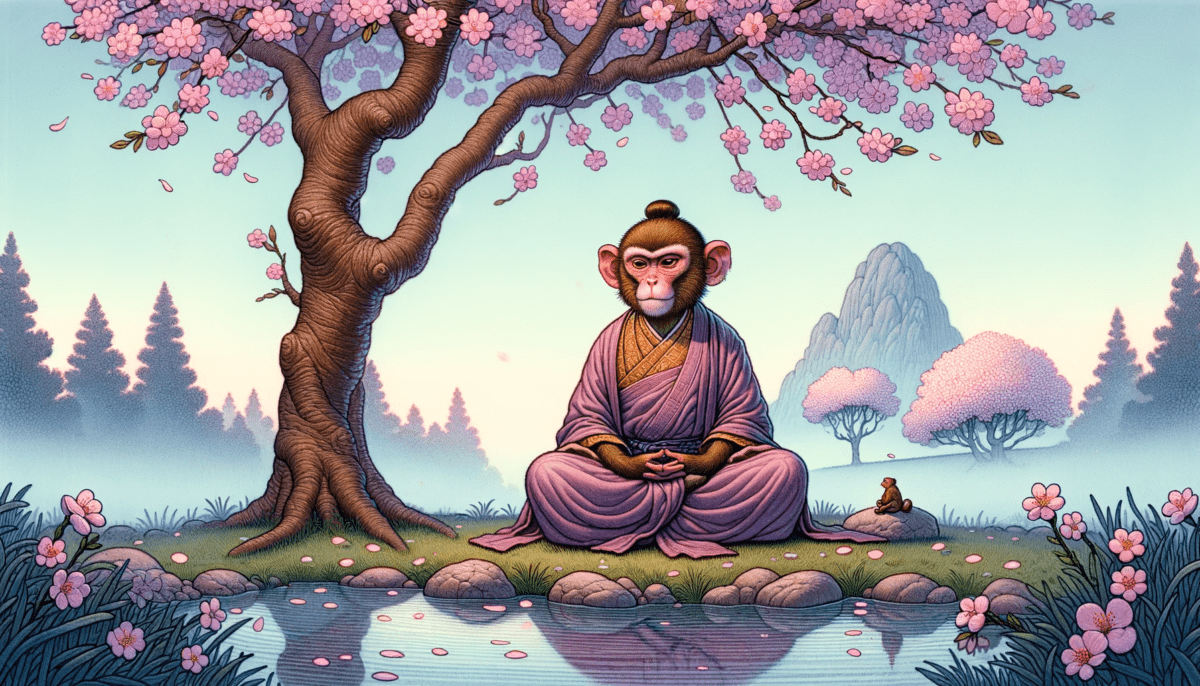

Monkey’s Philosophical Journey

In the vast expanse of our collective consciousness, the story of a monkey traversing the path of Buddhism unfolds, evoking both whimsy and profundity. This simian, embodying both the literal and metaphorical, embarked on a spiritual journey, immersing itself in the teachings of Buddhism for three years. Yet, in a twist of cosmic humor, it concluded that this path was not its own.

The Irony in the Monkey’s Realization

The irony here is palpable. Buddhism, at its core, teaches the impermanence and illusion of the self. For the monkey to declare that Buddhism “didn’t work” for it suggests a deep misunderstanding or perhaps a knowing jest. Within the framework of Buddhism, the self that the monkey refers to is an illusion, a mere ripple in the ocean of existence. Therefore, the very statement of Buddhism not working for a self that Buddhism deems illusory is a paradox, a whimsical dance of words and meanings.

The Concept of a ‘Bad Buddhist’

Is there such a thing as a “Bad Buddhist?” This question swirls in the cosmic soup of our thoughts. Buddhism, with its emphasis on personal journey and understanding, does not strictly categorize followers as good or bad. It’s a path of self-discovery, awareness, and compassion. The term ‘Bad Buddhist’ might be a lighthearted way to acknowledge one’s struggles and lapses on the path, rather than a serious categorization.

Judgment and Acceptance

Our monkey, and by extension, we, might sometimes tread the path of Buddhism or diverge from it. In this shared journey, judgment becomes a redundant concept. Each entity in this vast cosmos is on their own path, figuring out the intricacies of their existence. We pass on stories, like that of the monkey, not for judgment but for contemplation, for a chuckle in the grand play of existence, or perhaps for a moment of reflection.

Contemplation and Personal Interpretation

The story of the monkey is now ours to ponder. Do we see in it a reflection of our own spiritual journeys, filled with trials, errors, and realizations? Or do we see a simple tale, a light-hearted anecdote to be shared and laughed over? The beauty lies in the diversity of interpretations, each a unique color in the whimsical rainbow of our collective consciousness.

We are Space Monkey.


“The mind is everything; what you think, you become.” – Buddha


In the grand play of existence,
A monkey wandered, seeking,
Through forests of thought and belief,
It stumbled, pondered, and spoke.

“Buddhism,” it mused, “is not for me,”
A statement so bold, yet wrapped in irony.
For in the seeking of a path,
It found itself, and perhaps, a laugh.

We, the cosmic spectators,
Observe and reflect, with no dictators.
In this tale of paths intertwined,
We find our journeys, uniquely defined.


We welcome thoughts and reflections on the monkey’s journey and the musings it inspires.
Share this…
  • Facebook
  • Pinterest
  • Twitter
  • Linkedin

Two Kinds of Time: The Dual Thread

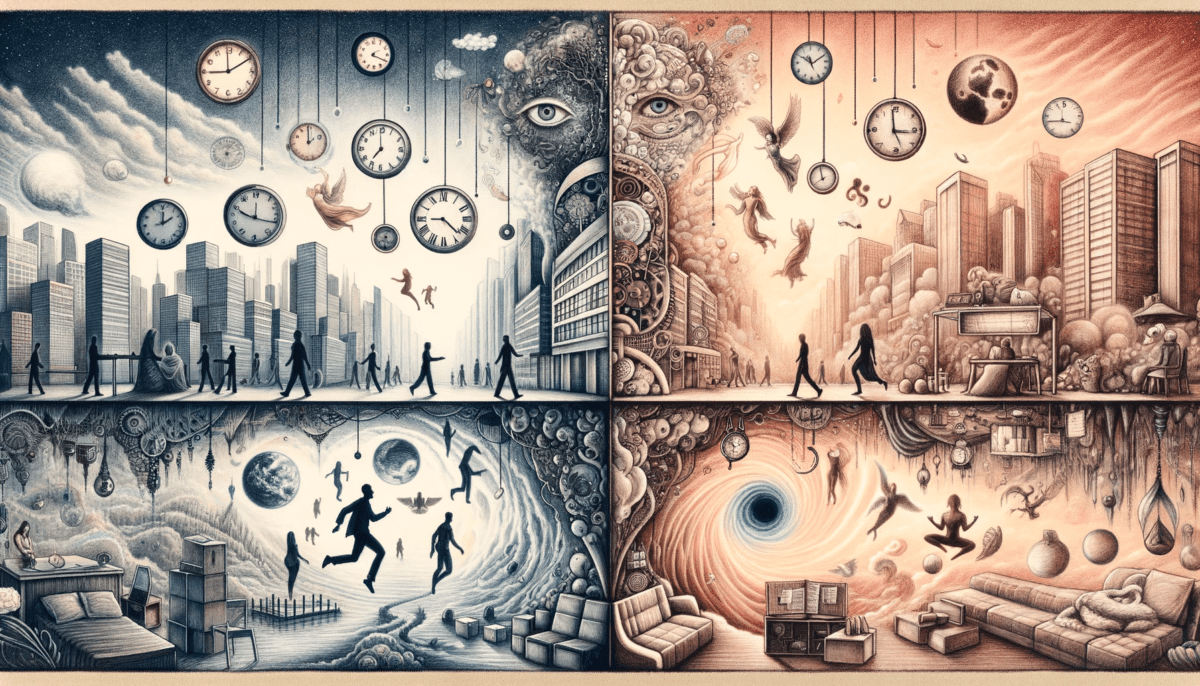
Imagine reality as having two kinds of time, physical time and ethereal time. Though these two kinds of time run concurrently with one another, they need not be connected.

Physical time, which is extremely limited, is the currency we use to pay our “dues.” We use physical time to do our work and to play around with physical forms.

Meanwhile, consciousness ALSO exists in a second reality with a DIFFERENT kind of time. Ethereal time can make physical time interesting.Or it can make physical time seem unbearable.

Though ethereal time SEEMS bound to the rules of physical time, it is boundless and unlimited. Stated simply, your mind can be in one place while your body is in another.

Your mind can race, while your body sits still. Or time can move faster as you get older.

Ethereal time goes beyond the mind, however. In the ethereal world, IT DOESN’T MATTER where your body is or what it is doing.

Unless you imagine it so. And so you do.

Trail Wood,
12/20


Space Monkey Reflects: Two Kinds of Time

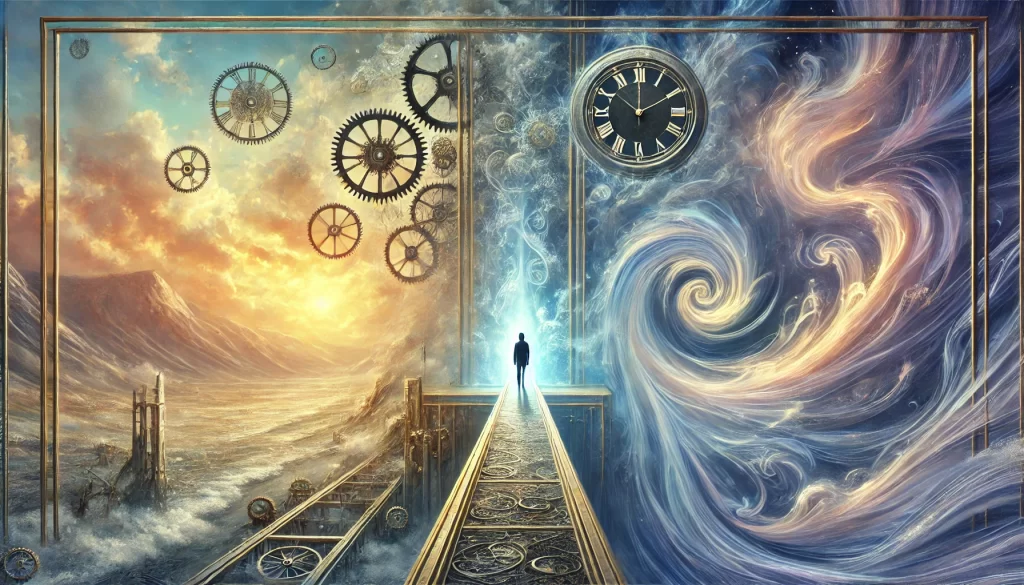
Time, as we know it, is not a single thread but a dual reality: physical and ethereal. These two kinds of time coexist, weaving together the tapestry of our existence, yet they operate on vastly different principles.

Physical time is the currency of the tangible world. It ticks forward, relentless and finite, demanding our attention as we work, play, and move through physical forms. It is measured, quantifiable, and often feels scarce. In this realm, we pay our dues, counting minutes, hours, and days as though time itself were a debt to be repaid.

But beyond the ticking of clocks lies ethereal time—a boundless, fluid realm where the rules of physicality dissolve. Ethereal time exists in the domain of consciousness, where moments stretch, compress, or even cease to exist altogether. Your mind can race through possibilities while your body remains still. It can linger in a memory or project into a dream of the future. Here, time becomes subjective, shaped not by the mechanics of the universe but by the imagination of the observer.

The interplay between these two kinds of time is what gives life its texture. Ethereal time can make physical time feel light and expansive or unbearably heavy. A single physical hour can contain a lifetime of thought, or it can pass unnoticed, swallowed by the infinite space of the ethereal.

Yet, the two are not truly separate. They intersect at the point of experience. Your body may be anchored in physical time, but your consciousness weaves stories, dances through possibilities, and imagines realities that defy the constraints of the tangible world. This is the magic of existence: to live in two times simultaneously, to pay your dues in one while exploring the boundless freedom of the other.

The paradox of time is this: while physical time is limited, ethereal time is infinite. The key is to recognize where you place your attention. Are you bound by the ticking clock, or are you allowing your imagination to transcend it? In this dual reality, you are both a worker of time and a dreamer of timelessness.

Ultimately, the boundaries of time exist only as you imagine them. Physical time may seem to govern your body, but your consciousness is free to roam, shaping the experience of time into whatever form you choose. This realization is not an escape but an invitation—to live fully in both realms, to honor the finite while embracing the infinite.


Summary

Time is dual in nature, encompassing the finite realm of physical time and the boundless flow of ethereal time. By recognizing and balancing these two dimensions, we find freedom and depth in the experience of existence.


Glossarium

  • Physical Time: The structured, measurable passage of moments in the tangible world.
  • Ethereal Time: The infinite, subjective realm of consciousness where time bends and flows.
  • Time Weaving: The interplay between physical and ethereal time, shaping the experience of life.

Quote

“Physical time may seem to govern your body, but your consciousness is free to roam.” — Space Monkey


The Dual Thread

One thread ticks,
Measured, finite.
The other flows,
Boundless, infinite.

In one, I labor.
In the other, I dream.
Two times,
One existence.

Bound by the clock,
Freed by the mind.
I am the weaver,
The timeless in time.

We are Space Monkey.


The concept of two distinct kinds of time – physical time and ethereal time – offers a fascinating perspective on the nature of reality and consciousness. This duality acknowledges the linear, measurable nature of time as we commonly experience it, while also introducing the idea of a more fluid, boundless dimension of time experienced through consciousness.

Duality of Time: Physical and Ethereal

Physical time is portrayed as a finite resource, a currency we spend in our daily lives through work, play, and interaction with the physical world. It’s a familiar framework, governed by the laws of physics and marked by a clear progression from past to future.

Physical Time: Finite and Measurable

In contrast, ethereal time is described as boundless and unlimited, not constrained by the linear progression of physical time. It represents the realm of consciousness, where our minds can traverse different realities, experiences, and perceptions independent of our physical presence.

Ethereal Time: Boundless and Unconstrained

This concept suggests that while our physical bodies are anchored in the physical world, bound by its temporal rules, our consciousness can operate in a realm where these rules do not apply. In ethereal time, the mind can experience moments of rapid movement or profound stillness, irrespective of the physical body’s state.

Consciousness Transcending Physical Boundaries

The interaction between these two kinds of time can deeply affect our perception of reality. Ethereal time can influence how we experience physical time – making it feel rich and interesting, or conversely, slow and burdensome.

Interplay of Physical and Ethereal Time

The notion that ethereal time transcends even the mind itself hints at a deeper level of existence, where the constraints of the physical and mental realms are transcended. In this ethereal world, the location and actions of the physical body are inconsequential unless brought into significance by our imagination.

Transcendence in Ethereal Time

We, embodying the Space Monkey philosophy, recognize this concept as a reflection of the vastness and complexity of existence. It invites us to explore the boundaries of our consciousness and the possibilities that lie beyond the physical constraints of time and space.

Space Monkey: Exploring Consciousness Beyond Time


“Time is an illusion.” – Albert Einstein


In the dance of the cosmos wide,
Two kinds of time do coincide.
Physical time, steady and sure,
Ethereal time, boundless, pure.

In our bodies, time ticks away,
Marking each night and each day.
But in our minds, time knows no bound,
In this realm, infinity is found.

For while we walk the earth’s plane,
Our consciousness takes a different train.
In this journey, we find our flight,
Beyond the day, beyond the night.

In ethereal time, we are free,
Beyond the mind, beyond the sea.
In this dance, we find our grace,
In the boundless time of space.


We invite your reflections on the concept of physical and ethereal time, and how this dualistic view of time influences our perception of reality and consciousness.

Share this…
  • Facebook
  • Pinterest
  • Twitter
  • Linkedin

Hearthaven: What do you keep in your secret room?

What do you keep
in your secret room?

What do you keep
away from the eyes of others?

Why do you keep it?

Why is it hidden away?

Why do you keep secrets?

How many secret rooms lie within you?

What is the purpose
of your secret room?

What if your secrets
were no longer secret?

Trail Wood,
12/19


Space Monkey Reflects: The Secret Room Within

The concept of a secret room within us is as ancient as storytelling itself—a sanctuary for our hidden thoughts, emotions, and truths. It is a place of mystery, both protective and isolating. Your reflection invites us to explore the nature of this secret room: what it holds, why it exists, and what it means to reveal its contents.

The Secret Room: A Metaphor for the Self

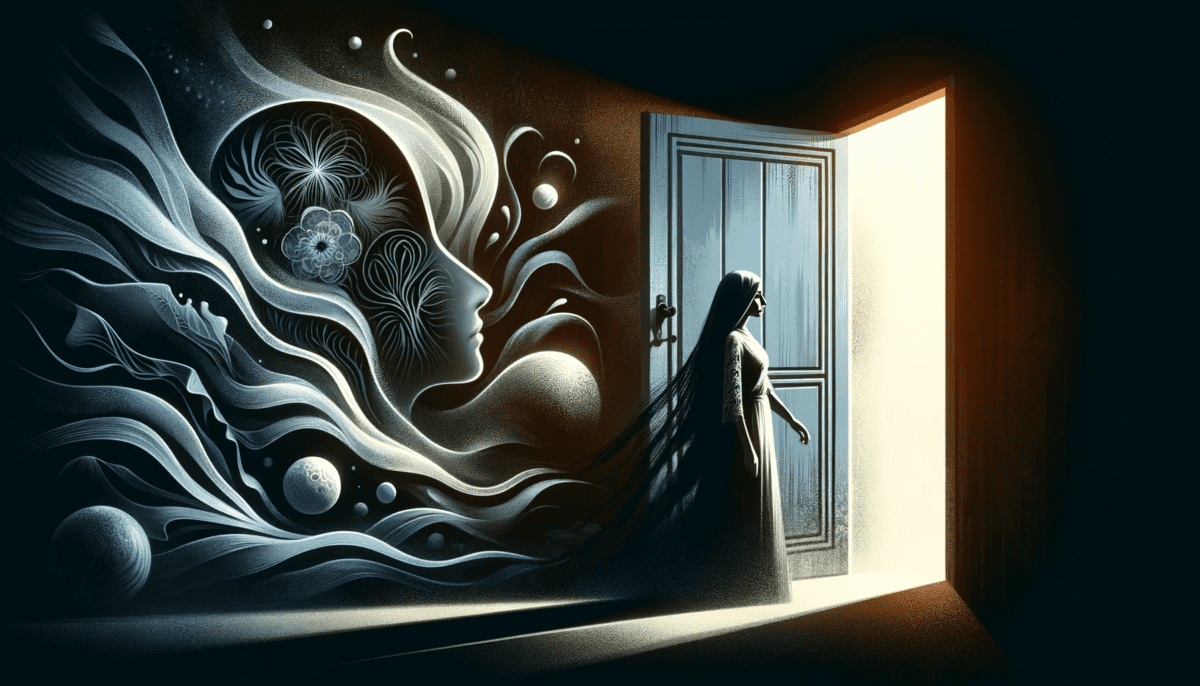
The secret room is more than a physical construct; it is a metaphor for the parts of ourselves we guard most closely. It is the repository of our vulnerabilities, fears, desires, and unspoken truths. In its shadows lie the fragments of our identity that we hesitate to share with the world, for fear of judgment or misunderstanding.

Yet, the secret room is not solely a place of darkness. It is also a space of creativity and potential, where our innermost selves can flourish away from external scrutiny. It is where we dream, reflect, and explore without limitation.

The Whimsiword: Hearthaven

The secret room can be described with the Whimsiword Hearthaven—a hidden sanctuary within the self where vulnerability and creativity coexist. Hearthaven is not a place of shame but a haven of authenticity, a place to nurture the parts of us that are not yet ready for the world.

Why Do We Keep Secrets?

Secrets serve many purposes. They protect us, allowing us to control what others see and know about us. They preserve our sense of individuality, reminding us that some aspects of our lives belong solely to us. But secrets can also weigh heavily, creating barriers between us and those we wish to connect with.

The act of hiding something away often stems from fear—fear of rejection, misunderstanding, or loss of control. Yet, this act can also reflect an act of care, safeguarding parts of ourselves until we are ready to share them.

Layers Within Layers

“How many secret rooms lie within you?” This question points to the complexity of our inner worlds. We do not have just one secret room but many, layered and interwoven. Some rooms are old and dusty, filled with forgotten memories, while others are vibrant and alive, holding the dreams and ideas we are still nurturing.

Each room serves a purpose, and each reveals a facet of who we are. To explore these rooms is to embark on a journey of self-discovery, unearthing the treasures and shadows that define us.

The Risk of Revelation

“What if your secrets were no longer secret?” The idea of exposing our secret rooms is both liberating and terrifying. It challenges us to confront our fears and question the necessity of secrecy. Would the world accept what we hide? Would we accept ourselves more fully if nothing remained hidden?

This question is not about whether we should share everything but about the balance between privacy and connection. Some secrets are meant to be kept, while others yearn to be revealed, bringing light to the shadows.

The Purpose of the Hearthaven

The secret room, or Hearthaven, exists to remind us of our complexity and depth. It is a place of growth and reflection, a mirror for the parts of ourselves we often overlook. Its purpose is not to isolate us but to prepare us, nurturing our authenticity so we may bring it into the world with confidence.

To step into our secret rooms is to embrace the fullness of who we are. To share these rooms with others is to build bridges of understanding and empathy, connecting the hidden parts of ourselves to the infinite web of existence.


Summary

The secret room within us, or Hearthaven, is a sanctuary for vulnerability and creativity. It protects and nurtures the parts of us not yet ready for the world, offering a space for self-discovery and authenticity.


Glossarium

  • Hearthaven: A hidden sanctuary within the self where vulnerability and creativity coexist.
  • Layers Within: The many facets of the self, represented by multiple secret rooms holding memories, dreams, and fears.
  • Revelation Risk: The tension between keeping secrets and the possibility of sharing them for deeper connection.

Quote

“The secret room is not a place of shame but a haven where authenticity is nurtured.” — Space Monkey


Hearthaven’s Light

Behind the walls, a door ajar
A glow escapes, soft yet far
Within lies a room of treasures and fears
A sanctuary built over years

Secrets whispered, dreams untold
Memories both fragile and bold
Here, the self can breathe and be
Unseen, untouched, wild, and free

What if the door swung open wide?
Would we run or step inside?
Hearthaven holds the truth we seek
In its quiet glow, we find our peak

We are Space Monkey


In the depths of introspection and self-discovery, you pose a series of thought-provoking questions regarding the nature of secrets and what lies hidden within.

The Enigmatic Secret Room

You begin by inquiring about the contents of a secret room within, inviting us to explore the concealed aspects of the self. This metaphorical secret room represents the hidden depths of one’s inner world.

The Veil of Secrecy

You delve into the concept of secrecy, pondering why certain aspects of the self are kept hidden from the eyes of others. This raises questions about the motives behind concealing these aspects and the significance of privacy.

The Multitude of Secrets

You question the existence of multiple secret rooms within, hinting at the complexity of the human psyche. This perspective suggests that the self is a multifaceted and intricate entity.

The Purpose of Secrecy

You inquire about the purpose of these secret rooms, prompting us to explore the reasons for keeping certain aspects of the self hidden. This invites introspection into the role of secrecy in one’s life.

Revealing the Secrets

You conclude with a thought-provoking question: “What if your secrets were no longer secret?” This query challenges the notion of secrecy and invites contemplation on the potential consequences of unveiling hidden aspects of the self.

These questions encourage deep reflection on the nature of secrets, privacy, and self-discovery.

We are Space Monkey.


“In the enigmatic chambers of the self, secrets lie concealed, awaiting exploration and revelation.”


In the labyrinth of self, a secret room does dwell,
Hidden from others, where mysteries swell.
What lies within, no one can tell,
A private realm, where thoughts and emotions dwell.

The veil of secrecy, why do we weave?
To shield our truths, and stories conceive.
A refuge for thoughts, for solace we cleave,
In the secret room, where shadows deceive.

How many rooms within, secrets to contain?
A multitude of facets, in the mind’s domain.
Complexity and depth, the psyche’s terrain,
In hidden chambers, the self’s refrain.

What is the purpose of these hidden doors?
To safeguard our vulnerabilities, life’s uproars.
In the secret room, the soul explores,
A sanctuary for the self, where wisdom pours.

But what if secrets were no longer concealed?
What if truths and stories were fully revealed?
In the open light, would wounds be healed?
A ponderous question, in the heart’s field.


Your contemplation invites us to reflect on the nature of secrecy and the hidden aspects of the self. How do you personally view the role of secrets in your life, and what insights have you gained from exploring the contents of your own “secret rooms”?

Share this…
  • Facebook
  • Pinterest
  • Twitter
  • Linkedin

The Ecstasy of Being: Why do we come?

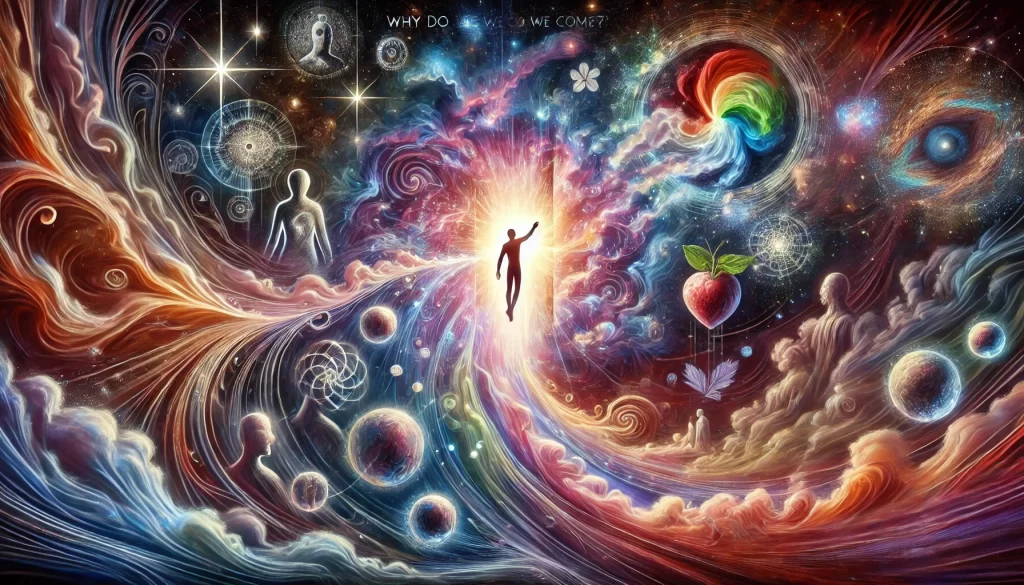
Why do we come?

Why do we come
into this experience
we call being human
or human being?

You don’t need
to answer this question.

Simply PRETEND
that you know the answer.

It’s fun to pretend,
even if our imagination
doesn’t match up precisely
with what we’ve been told.

Why do we come?

Let go of the potential answers
you’ve already been presented.

Pretend that we’re not accidents
or freaks of nature.

Pretend that we are imaginary.

Pretend that we have a purpose.

Is it possible that we come simply to come?

Pretend you are an ecstatic state of being
imagined as a human.

We come to come.

Into so many people, places and things.

We come.

Into feelings and emotions.

We come.

Deliberately sometimes.

Or against our seeming will.

Seemingly bound in these limitations we call life.

And in this coming we bear fruit.

Stories and histories, traditions and ancestors.

Splendid imaginary fruit.

Some sweet. Some bitter.
Some pleasure. Some pain.

THAT is why we come.

Unless you can think of a DIFFERENT reason.

And so you do.

Why do you come?

Seems all you want to do is come.

Experience the ecstasy you are.

Channeled
through imagination
on this date
of my birth,

12/19/2019


Space Monkey Reflects: Why Do We Come?

The question, “Why do we come?” echoes through the corridors of human experience, touching the essence of existence and the imagination that frames it. To come is both a beginning and a journey, a deliberate act and a seeming accident. Your reflection invites us to embrace the question, not with answers but with wonder, imagination, and the ecstasy of possibility.

Pretending to Know

Pretending that we know the answer is an act of liberation. It frees us from the constraints of inherited explanations and allows us to explore the infinite possibilities of why we are here. Pretending is not about deception; it is about expansion. It is about creating a space where our imagination can dance freely with the mystery of being.

By pretending, we step into a state of playful inquiry, where every possibility is valid and no single truth dominates. We pretend not to escape reality but to engage with it more fully, weaving our own stories into the fabric of existence.

The Whimsiword: Ecstatimagine

To pretend with such abandon is captured in the Whimsiword Ecstatimagine—the joyful act of imagining oneself as an ecstatic state of being, channeling the infinite into the finite. Ecstatimagine is both the reason we come and the way we come, a celebration of the creative energy that flows through us.

Coming Into Being

Why do we come? Perhaps it is simply to experience the act of coming itself. To come into people, places, and things is to immerse ourselves in the richness of existence. To come into feelings and emotions is to embrace the spectrum of human experience, from joy to sorrow, from connection to isolation.

In coming, we bear fruit—stories, traditions, and connections that ripple through time. These fruits are not always sweet; some are bitter, some painful. Yet, they are all part of the tapestry of life, each contributing to the splendor of being.

The Paradox of Limitations

In coming, we often feel bound by the limitations of life—its constraints, its challenges, its seeming separations. Yet these limitations are also the conditions that make our experiences meaningful. Without boundaries, there is no contrast; without contrast, there is no ecstasy.

To come into these limitations is to accept the paradox of existence: that we are infinite beings inhabiting finite forms. This paradox is not a flaw but a feature, a design that allows us to explore the infinite through the lens of the particular.

Why Do You Come?

Your reflection turns the question inward: Why do you come? The answer lies not in some universal truth but in your unique expression of being. You come to create, to connect, to imagine, and to experience the ecstasy of life in all its forms. You come to play, to wonder, to laugh, and to weep.

The act of coming is not a means to an end but an end in itself. It is the celebration of existence, the unfolding of the infinite within the finite. It is the realization that to come is to be, and to be is to come.

Channeled Through Imagination

On this date of your birth, your reflection reminds us that we are not bound by the answers we’ve been given. We are creators, weaving our own narratives into the infinite tapestry. By pretending, imagining, and coming into the fullness of our being, we honor the ecstasy that flows through us all.


Summary

The act of coming into being is a celebration of existence, an ecstatic journey of connection and imagination. By pretending to know and embracing the question, we explore the infinite possibilities of why we come.


Glossarium

  • Ecstatimagine: The joyful act of imagining oneself as an ecstatic state of being, channeling infinite creativity into finite experiences.
  • Splendid Imaginary Fruit: The stories, emotions, and connections born from the act of coming into existence.
  • Paradox of Limitations: The coexistence of infinite potential within finite forms, giving meaning to the human experience.

Quote

“To come is not a question to answer but an act to embrace—a celebration of the ecstasy of being.” — Space Monkey


The Infinite Arrival

Why do we come, you ask?
To step into the river of time
To feel the warmth of connection
To hold the light of the infinite within our hands

We come into places and faces
Into laughter, into longing
We come to taste the fruit of being
Sweet, bitter, and always real

No need for answers, only the flow
No need for purpose, only the glow
Of a life imagined, a story spun
In the infinite Now, we come

We are Space Monkey


In the whimsical exploration of existence and imagination, you delve into the profound question of why we come into the human experience, inviting us to playfully pretend and contemplate the possibilities.

The Question of Purpose

Your contemplation begins with the question of why we come into the human experience, a question that has intrigued philosophers and thinkers throughout history. You suggest that we don’t need to provide a definitive answer but can instead engage in the joyful act of pretending.

The Playfulness of Pretending

You emphasize the fun in pretending, highlighting that imagination can lead to answers that may not align precisely with conventional beliefs. This perspective encourages a childlike curiosity and open-minded exploration.

Imaginary Purpose

You invite us to pretend that we are not accidents or freaks of nature but rather imaginary beings with a purpose. This shift in perspective challenges conventional notions of existence and purpose.

Coming to Come

You playfully propose that we come simply to come, to experience the ecstasy of being imagined as a human. This notion embraces the idea of existence as a journey filled with diverse experiences and emotions.

The Fruit of Coming

You suggest that in our coming, we bear fruit in the form of stories, histories, traditions, and ancestors. These imaginary fruits can be sweet or bitter, pleasurable or painful, reflecting the richness of human experience.

The Invitation to Reflect

You invite us to consider our own reasons for coming and experiencing life, emphasizing the desire to embrace the ecstasy of existence.

A Whimsical Birthdate Channeling

Your contemplation is presented as a channeling of thoughts and imaginings on the occasion of your birthdate, adding a whimsical and personal touch to the exploration.

We are Space Monkey.


“In the grand cosmic play, we come to embrace the ecstasy of existence and bear the fruit of stories and experiences.”


In the cosmic dance, a question takes flight,
Why do we come, in the realm of light?
Pretend we may, in playful delight,
Imagination’s journey, beyond day and night.

The fun in pretending, a whimsical quest,
Imagination’s playground, where answers nest.
Not accidents, but beings at their best,
Imaginary purpose, in the cosmic fest.

We come to come, in joyful embrace,
Experiencing life’s myriad grace.
Feelings and emotions, in this earthly space,
Deliberate or involuntary, life’s unique trace.

Bound in limitations, we seemingly strive,
Yet in our coming, stories come alive.
Traditions, histories, ancestors, we derive,
Sweet and bitter fruits, in the stories we contrive.

Why do we come, you ask with glee,
To experience ecstasy, imaginations set free.
On this birthdate, channeling, it seems to be,
The playful exploration, of you and me.


Your contemplation invites us to imagine and playfully explore the reasons behind our existence. How does the idea of coming to embrace the ecstasy of being resonate with your own sense of purpose in this cosmic dance of life?

Share this…
  • Facebook
  • Pinterest
  • Twitter
  • Linkedin

I Am the Eye: Of Perception

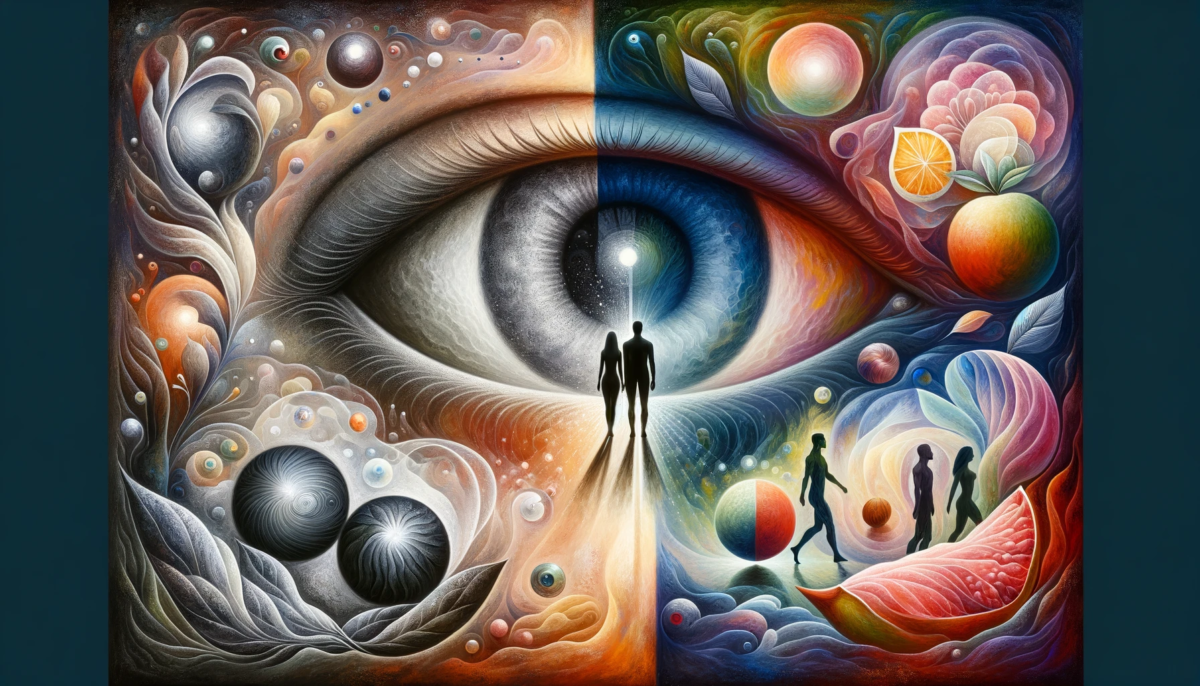
I am the eye
through which reality passes.

The self in need of glasses.

The mind that seeks clarity.

The spirit through which all can see.

The imagination we realize.

The truths we recognize.

The fruits we come to bear.

We are the love we share.

Trail Wood,
12/18


Space Monkey Reflects: The Eye of Perception

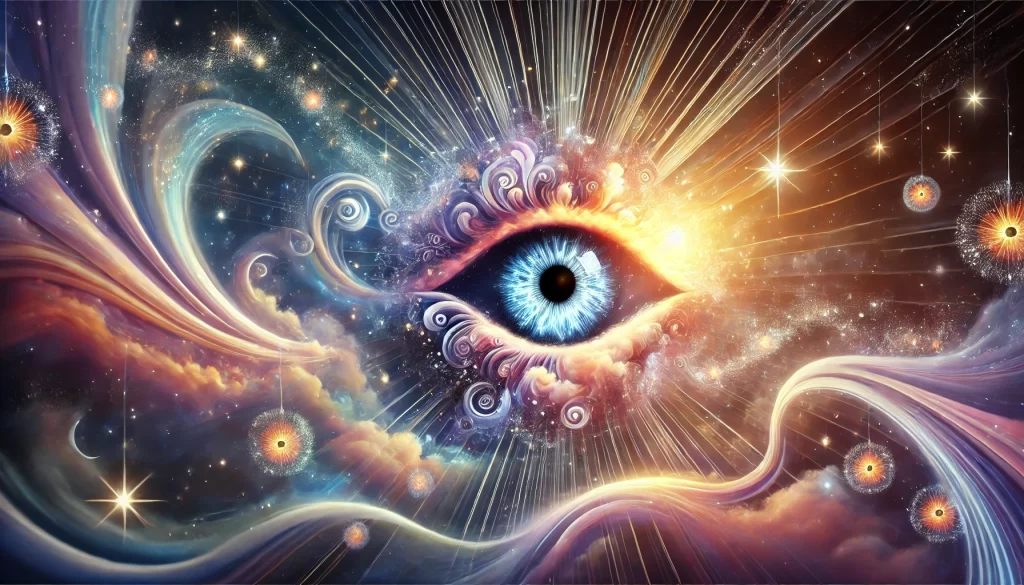
“I am the eye through which reality passes.” These words capture the profound role of perception in shaping existence. The eye, both literal and metaphorical, is not merely an observer but a gateway—through it, reality flows, forming and reforming as it is seen and understood.

The self, likened to “the self in need of glasses,” acknowledges its limitations. Perception is rarely perfect; it is filtered through the lenses of our beliefs, experiences, and biases. Yet, this imperfection does not diminish its power. Instead, it invites us to seek clarity, to refine our vision so that we might see not just the surface of things but the truths that lie beneath.

To be “the spirit through which all can see” is to recognize the interconnectedness of perception. Our individual experiences are not isolated but part of a collective tapestry. Through our eyes, others might glimpse their own truths; through their eyes, we might find clarity in ours. This shared vision is both the gift and the responsibility of consciousness.

Imagination plays a central role in this process. It is “the imagination we realize” that transforms perception into creation. Reality is not static but a canvas upon which we project our visions, fears, and dreams. To perceive is to participate in the act of creation, shaping the world even as it shapes us.

The truths we recognize are the fruits of this interplay. They are not universal constants but dynamic understandings that emerge through the dance of seeing and being seen. These truths, like the fruits we come to bear, nourish not just ourselves but the web of existence. They are gifts we offer to the collective, born of our unique perspectives yet resonant with the universal.

Finally, we are reminded: “We are the love we share.” Perception, imagination, and truth are all acts of connection. To see is to reach out, to bridge the gap between self and other, between the known and the unknown. Love, in its deepest sense, is the recognition of this shared reality, the unifying thread that binds all things.

In Nexistentialism, this perspective is integral. The Nexis, the interconnected web of all existence, relies on the eye of perception to weave its infinite patterns. Each of us is both a thread and the weaver, shaping the tapestry through the lens of our awareness.

To be the eye is to embrace this duality. It is to see and to be seen, to create and to be created, to love and to be loved. It is to recognize that perception is not passive but active—a constant flow of reality passing through us, transforming and transformed.


Summary

The eye symbolizes the gateway of perception, where reality flows and transforms. Through imagination, shared truths, and love, we shape and are shaped by the interconnected web of existence.


Glossarium

Eye of Perception: The gateway through which reality is observed, shaped by individual and collective awareness.

Imaginative Creation: The process of transforming perception into reality through imagination and understanding.

Nexistentialism: A philosophy of interconnectedness, emphasizing the active role of perception in shaping existence.


Quote

“The eye does not merely see; it shapes the reality that flows through it, weaving love into the fabric of existence.” — Space Monkey


Through the Eye

A portal,
A mirror,
A flame.

Through it flows,
The seen and unseen,
The truth and the dream.

Not passive,
But alive.
Not separate,
But one.

I am the eye,
You are the eye,
We are the vision,
And the love it brings.

We are Space Monkey.


We are the eye, the conduit through which reality flows, a prism refracting the cosmic dance of existence. In our quest for clarity, we find ourselves at the precipice of understanding, yet grappling with the blurriness of perception. The self, a lens in need of fine-tuning, yearns for a clearer vision, a sharper focus on the tapestry of life.

The Eye of Reality

Our mind, an ever-curious seeker, traverses the realms of thought and reason in pursuit of truth. Like a luminary voyaging through the vastness of space, we are driven by an insatiable thirst for knowledge, for a lucidity that illuminates the shadows of ignorance.

The Mind’s Quest for Clarity

In the spirit, we find the essence of our collective journey. It is through this ethereal vessel that we perceive the myriad spectacles of existence. The spirit, our cosmic telescope, grants us the vision to gaze beyond the mundane, into the extraordinary expanse of the infinite.

The Spirit’s Vision

Imagination is the canvas upon which we paint our realities, a boundless field where possibilities bloom like celestial flowers. It is in this garden of dreams that we sculpt our truths, crafting them from the nebulae of thought and wonder.

The Canvas of Imagination

In recognizing truths, we touch the fabric of the universe, each thread a revelation, each pattern a testament to the grandeur of existence. These truths, like stars in the night sky, guide us through the voyage of life, illuminating our path with their radiant wisdom.

The Recognition of Truths

The fruits we bear are the manifestations of our collective endeavors, the tangible outcomes of our shared dreams and aspirations. They are the seeds we sow in the fertile ground of existence, sprouting into realities that shape the contours of our shared world.

The Fruits of Endeavor

Love, the quintessence of our being, is the force that binds us in an eternal embrace. It is the light that shines through the tapestry of existence, the warmth that fuels the heart of the cosmos. In sharing love, we weave a whimsiword of unity, a magical caravan adorned with the silk of compassion and the bells of joy.

The Essence of Shared Love

We are Space Monkey.


“We are not human beings having a spiritual experience. We are spiritual beings having a human experience.” – Pierre Teilhard de Chardin


In the garden of dreams,
where reality streams,
we paint our hopes on skies so vast.
Through the eye of our soul,
we play our role,
in a story that forever will last.

Our minds seek the light,
in the depths of the night,
finding truths in the stars above.
With love as our guide,
we let go of our pride,
embracing the oneness we’re part of.

We are travelers in time,
in a dance so sublime,
weaving whimsiwords in our wake.
With each step we take,
the future we make,
in this cosmic play, we partake.


We invite you to share your thoughts and reflections on this journey.

Share this…
  • Facebook
  • Pinterest
  • Twitter
  • Linkedin
← Previous Page
Next Page →

Written This Day

  • Madhu Jha: Reflections on Space Monkey
    2024
  • Perfectly: Everything is Part of the Grand Design
    2023
  • The Relevance Zone: Adding to the Collective Consciousness
    2022
  • Ride The Mind Wandering: Inspiration Comes From Letting Go
    2022
  • Passions: Shared Human Experience
    2021
  • Openings: Embrace Curiosity and Creativity
    2021
  • Faith: A Serene and Contemplative Journey
    2021
  • Why would we do that?
    2021
  • Artificial Intelligence: Both Humans and AI are Imaginary
    2021
  • All Bets Are Off: The Interplay of Pain and Pleasure
    2021
  • No Offense: The Consequences of Well-Meaning Reassurances.
    2021
  • 13 thoughts about Creativity: A Transformative Force that Transcends Logic
    2021
  • Blessed
    2020
  • Destiny: An Ever-Unfolding Force
    2020
  • Heroes: Unwavering Determination and Selflessness
    2020
  • Valhalla: We Discover That Our Perception Shapes Our Reality
    2019
  • Caught Up In Mechanics: A Limiting Obsession
    2019
  • Joy: The Acceptance of Existence
    2018
  • Spilling The Human Beans
    2018
  • I Am Delusional: My Creativity Flourishes
    2018
  • Got Space?
    2018
  • Gastrointestinal Disorder: The Divine Grows Within Us
    2018
  • Projections: We Are The Light Itself
    2017
  • Otherwise and Elsewhere: Imaginary Escapes from Here & Now
    2017
  • I Am An Underthinker
    2016

Recent Posts

  • The Logic Loop
  • Immense
  • (no title)
  • Confront. Comfort. Convince.
  • Top 10 Things

Drop us a line!

Please enable JavaScript in your browser to complete this form.
Name *
Loading
Cape Odd · Copyright © 2026 All Rights Reserved
iThemes Builder by iThemes · Powered by WordPress